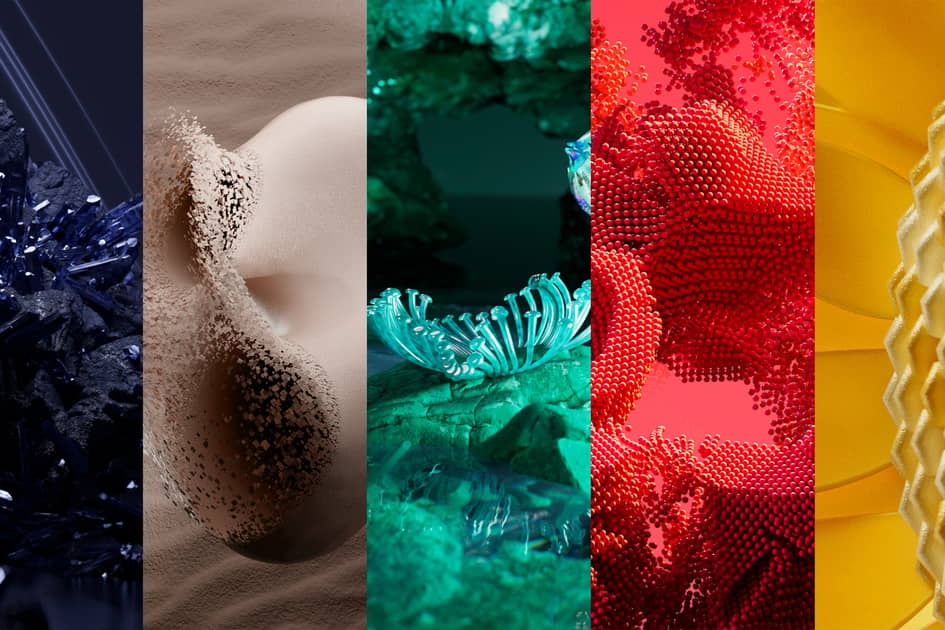
Image: Sorel, Facebook
Columbia Sportswear Company has announced that Mark Nenow, president of the Sorel brand, has resigned in order to focus on his health.
Nenow joined the company in 2007 to lead footwear. The company said in a statement that he recognized an opportunity to transform the Sorel brand, from primarily a men’s winter work boot to a fashion-forward, all season women’s led brand.
“Mark led the brand to sales of 347 million dollars in net sales in 2022. His leadership has been invaluable to this company, and we wish him the very best,” said Tim Boyle, the company’s chairman, president and CEO.
The company added that Nenow became president of Sorel in 2015 and focused his attention on growth through a relentless drive towards function-led style applied to boots, sandals, sneakers and more. Sorel has consistently seen growth year over year, establishing itself as the second largest of our family of brands.
The company further said that Craig Zanon, senior vice president, emerging brands, will lead Sorel till a replacement is found.
http://dlvr.it/Sq9JYL
Women shirts & amp; Pajamas and versatile Fashion of Amazon and Alibaba., fashion, Facebook,youtube, instagram, tweeter and google
Monday, June 5, 2023
Spotted on the catwalk: WGSN and Coloro’s key colours for SS25
The colour trends for SS25 from Coloro x
WGSN. Image: Coloro
As part of their biannual webinar, WGSN and Coloro unveiled their five trend colours that can be
expected to lead the way during the SS25 season. Each of the hues were
selected for their ability to convey a sense of reassurance at a time of
great uncertainty and global change, the trend authorities said, while also
reflecting a “shift towards strategic imagination”.
To encourage inspiration, FashionUnited has compiled some looks from
recent runway collections in the colours selected by WGSN and Coloro.
Future Dusk
Coming out on top as Colour of the Year for 2025, ‘Future Dusk’ was
presented as a “reliable blue” by head of colour at WGSN, Urangoo Samba,
during the webinar, who said that the hue instilled “a sense of confidence
and stability” while driving “the creation of new futures”. According to
Samba, the decision to select such a tone was linked to the authority’s
forecast that dark hues were to gain momentum during this period, as they
tap into a time of transition.
Future Dusk could already be seen in numerous iterations as part of
recent designer collections, many of which could be linked to WGSN’s idea
that the colour has a strong connection to the current fascination with the
second space age. At Alberta Ferretti's ‘24 Resort, for example, the hue
was used in combination with contrasting materials that formed a hooded
dress with a panelled bodice, reminiscent of sci-fi attire. Meanwhile, at
Saint Laurent’s SS23 show, the colour was present in a floor-sweeping
leather coat resulting in a modernised take on the Matrix.
Images (from left to right): Alberta Ferretti Resort 24, Dior
FW23, Saint Laurent SS23. Credit: Spotlight Launchmetrics Images (from left to right): Dundas FW23, Keisukeyoshida
FW23, M Rof FW23. Credit: Spotlight Launchmetrics
Transcendent Pink
Transcendent Pink is versatile and suitable for people of all genders
and demographics, making it a “commercially reliable” choice, stated
Caroline Guilbert, the creative content lead at Coloro. Unlike other pinks
that have recently been popular – namely that of Barbie’s hot pink – this
tone takes on a more subtle shade that comes across as earthy, therefore
carrying a sense of stability, as suggested by Guilbert.
For past seasons, many designers opted to use the fluid tone for
eveningwear, seeing it incorporated into slinky dresses, heavy
embellishments and flowing gowns. While a sheer dress with cowl neckline
came weighted in crystal beading at Versace’s FW23, during the show of the
typically bohemian Zimmerman, the tone was seen in a striking dress with
ruffles traversing down the body. Other designers, however, used the
opportunity to show this pink in a different light, incorporating it into
outerwear attire, like ski coats and knitwear. A look in MaxMara’s
collection saw the tone appear in a head-to-toe outfit, with chunky knits
layered under a voluminous coat.
Images (from left to right): Alberta Ferretti Resort 2024,
Victoria Beckham Resort 2024, Versace Fall/Winter 2023. Credit: Spotlight
Launchmetrics Images (from left to right): Versace Fall/Winter 2023,
MaxMara Fall/Winter 2023, Zimmermann Fall/Winter 2023. Credit: Spotlight
Launchmetrics
Aquatic Awe
This colour tone has a dual nature, embodying elements of both the
natural world and the virtual realm. Aquatic Awe draws inspiration from
marine life and its ecosystems, while also reflecting the growing trend of
immersive virtual worlds. This unique combination bridges the gap between
fantasy and reality, as noted by Samba, who labelled the tone among her
personal favourites for 2025.
Like its duality, designers that incorporated Aquatic Awe into their
collections also presented differing outcomes, with the tone appearing on
everything from streetwear to eveningwear to more experimental
ready-to-wear. While Aitorgoikoetxea offered up the aqua-like hue in a
netted cardigan, Speed took on an alternative of the suit, with a velvet
skirt and blazer combo that saw the colour in an ombre print. Victoria
Tomas, on the other hand, served an update to streetwear, using the tone in
a metallic translucent material for a sheer co-ord.
Images (from left to right): Lanvin FW23, Speed SS24,
Victoria Beckham FW23. Credit: Spotlight Launchmetrics Images (left to right): Balmain FW23, Victoria Tomas FW23,
Aitorgoikoetxea FW23. Credit: Spotlight Launchmetrics
Sunset Coral
This new take on coral looks to serve as a remedy for society's fixation
on productivity and, despite its vibrant appearance, encouraging
individuals to embrace moments of idleness and relaxation, Coloro’s
Guilbert said. Additionally, the colour expert discussed the notion of
"conscious hedonism" associated with Sunset Coral, as it aims to forge a
meaningful connection between moments of indulgence and a greater sense of
purpose. Like a breathtaking sunset, this shade embodies both joy and
significance.
While coral has been a consistent part of recent fashion seasons past,
this fresh iteration of the hue provides a bolder take on the usually
subdued pigment. This was also reflected in its runway appearances
throughout 2023 seasons, where daring shapes and experimental silhouettes
led the way. For its own FW23 collection, Act N.21 took on the shade in a
fishtail gown whose neckline blossomed into an exaggerated fluffy cloud.
Meanwhile, Palmer Harding played with silhouette as a whole, as seen in a
dress that was gathered and tied in various locations forming an
asymmetrical hem.
Images: Gabriela Hearst FW23, Act N.21 FW23, Rojas SS23.
Credit: Spotlight Launchmetrics Images: Yuzefi SS23, Christopher Kane FW23, Palmer Harding
SS23. Credit: Spotlight Launchmetrics
Ray Flower
When speaking on Ray Flower, Coloro cited the work of multidisciplinary
designer Jess Redgrave – who works with sunflowers to make natural dyes –
as the source of inspiration for this vibrant yellow shade. Ray Flower was
described by Samda as “inherently optimistic and soothing”, and referenced
the growing trend towards more radical sustainability, where the
environment is seen as a valued stakeholder in design and production.
The bold tone was used in a similarly daring way for its appearance in
designer collections, where it held a surprising versatility and exhibited
many uses. For Ferragamo and OffWhite, the yellow appeared in the form of
outerwear, in contemporary raincoats and parka-trouser combos. In a notable
contrast, Jil Sander and Dundas presented the shade in red-carpet-ready
eveningwear, either used in a structured sweeping skirt or for a silky
flowing maxi dress.
Images (from left to right): Christopher John Rogers Resort
2024, Dundas FW23, OffWhite FW23. Credit: Spotlight
LaunchmetricsImages (from left to right): Ferragamo FW23, Jil Sander FW23,
GCDS FW23. Credit: Spotlight Launchmetrics
### Background information:
Colour trend forecasting involves predicting the future popularity of
specific colours by analysing cultural trends, social movements and design
influences among others. Companies like WGSN and its sister company,
Coloro, employ their expertise and industry knowledge to examine current
trends, consumer behaviour, and emerging styles. By doing so, they forecast
the colours that will be in demand in the coming years, enabling their
clients, and/or designers, manufacturers, and retailers, to stay ahead of
the curve.
This article has been edited by Jule Scott, Rachel Douglass
and Esmée Blaazer.
Read more:
* The role of colour in fashion
* Spotted on the catwalk: WGSN and Coloro’s key colours for
AW23/24
* Spotted on the catwalk: WGSN and Coloro’s colour of the
year 2025 Future Dusk
http://dlvr.it/Sq8tdr
Saturday, June 3, 2023
L’Oréal invests in biotech company Debut
Image: L’Oréal
L’Oréal’s venture capital fund Bold has announced its latest investment in US biotech company Debut as it looks to rapidly scale the firm’s manufacturing platform.
Through the funding, Debut is also looking to meet the growing demand for products made using biomanufacturing, building on the existing joint development programmes of Debut and L’Oréal.
Debut’s IP portfolio has the ability to produce over 7,000 ingredients that can help to bring high-value, sustainable alternatives to the market faster, L’Oréal noted in a release, with the company particularly specialising in end-to-end discovery, formulation, clinical trials and the production of natural ingredients.
Its platform allows such products to be created in larger quantities, implementing synthetic biology to reduce complexity and deliver ingredients in as few as six weeks.
Speaking on the partnership, Barbara Lavernos, deputy CEO of research, innovation and technology at L’Oréal, said: “Debut addresses one of the beauty world’s fundamental challenges: driving innovation without the resource-intensity and environmental impact that comes with relying on traditional manufacturing alone.
“Cell-free biomanufacturing is not science fiction: it is here. We could not be more excited to be the first beauty company to invest into this technology with Debut.
“We are delighted with our partnership with Debut to create together stand-out active beauty innovations while protecting the planet’s resources.”
http://dlvr.it/Sq4WFs
Friday, June 2, 2023
Puma launches podcast to break down its sustainability report
Image: Puma; Re:Gen Reports podcast
Global sportswear brand Puma has launched a new podcast series discussing its sustainability report to make it more accessible to its Gen-Z audience.
Each of the 10 episodes in the Re:Gen Reports series will discuss one of Puma’s 10for25 sustainability targets, ranging from human rights to sustainable product sourcing in an “engaging conversation” featuring next-generation thinkers, explaining why the company set targets in these areas and what progress it has made.
Anne-Laure Descours, chief sourcing officer at Puma, said in a statement: “We believe in collaboration, when it comes to sustainability, whether it is NGOs, brands or consumers, especially young people, who will have to live with the decisions made today.
“During last year’s Conference of the People, we saw that we needed to do more to reach out to younger generations when we talk about sustainability. A sustainability report as a podcast has never been done before in our industry, but we believe it is an important step to connect with Gen-Z audiences and open up these important conversations.”
The first three episodes are streaming now, with the additional seven episodes to be released weekly from June 8 until July 20.
In the first episode, Anya Dillard, a US-based award-winning activist, model, and social entrepreneur speaks to Viola Wan, Puma’s team head of social sustainability based in China, discussing the sportswear brand’s audit work with factories in its supply chain.
The following episode focuses on Puma’s chemical target to make 100 percent of its products safe to use, featuring Germany-based sustainable and healthy living vlogger Luke Jaque-Rodney in conversation with Klaas Nuttbohm from ZDHC, an organisation leading the fashion industry to eliminate harmful chemicals.
While the third episode concentrates on circularity and Puma’s target to reduce production waste to landfills by at least 50 percent. US-based up-cycler Andrew Burgess is joined by Puma’s senior manager of corporate strategy Simon Hessel to discuss the chemical recycling process and how it’s used in Re:Fibre, Puma’s textile-to-textile recycling project.
http://dlvr.it/Sq1c8v
Thursday, June 1, 2023
How fungi can detoxify the fashion industry and fashion education
Critical Fashion Practices participants, at work during a workshop by alumni Wei Chi Su and Lianca van der Merwes. Image courtesy of ArtEZ
What do two seemingly unrelated subjects such as fungi and fashion have to do with each other? According to Chet Bugter, the new head of the master’s course Critical Fashion Practices, a lot, actually! For him and Alia Mascia, a second-year master’s participant in the Critical Fashion Practices course, it is high time to reimagine the way the fashion industry operates. They discuss how a model drawing inspiration from fungi is essential to that revamping.
ABOUT
ArtEZ University of the Arts is a University of Applied Sciences with its headquarters in Arnhem, the Netherlands. With 800 students, the Academy of Art & Design Rietveld in Arnhem, where the Bachelor in Fashion Design is one of the programmes students can choose, is the largest academy at ArtEZ.
In the ArtEZ master course ‘Critical Fashion Practices’, students learn to explore alternative, ‘non-industrial modes and frameworks for making, doing, seeing and experiencing fashion and clothes’, the school website reads. www.artez.nl
Chet, along with his colleague Hanka van der Voet, co-authored ‘A Fruiting Body of Collective Labour: Working Towards a De-Hierarchised System for Fashion Education’. It is a manifesto and guide on the master’s course’s vision to detoxify the fashion education industry of its harmful pedagogical and structural mindset.
Fashion education as a supportive system
The idea behind the manifesto came from fungal networks, specifically mycorrhizal systems, which enable trees to communicate with and support each other in a forest. It is not communication that we recognise as humans, so through language, but communication through nutrient exchange. This exchange is only possible through the trees’ symbiotic relationships with fungi that wrap around the trees’ roots, and more broadly speaking, only possible through cooperation and collective thinking.
Roots surrounded by mycorrhizal fungal threads. Image edit by Pernille Winther, ArtEZ.
Chet: “We wanted the Critical Fashion Practices course to resemble this supportive system. In a fungal network, which usually runs so much deeper than we see with the naked eye, if one part gets sick, the other parts send it nutrients to recover. We saw a clear similarity in how we wanted our learning community to be. The usual structure in fashion education is rather hierarchical: there is one person who sort of ‘knows it all’ (for example: a star designer), everyone works in association with them and if they can’t be there, then everyone else is lost. Instead, our idea is that all the different participants in this school network have the same amount of power and responsibility to keep the learning environment thriving.”
These alumni have invented themselves. Joris and Tessa have been looking for something that suits them, but for which there is also clearly a place in the industry. Their work has clearly been picked up.
Chet Bugter, head of Critical Fashion Practices, ArtEZ
Mycorrhizal systems as a catalyst for positive growth
That kind of approach can be seen in every detail of the course, from the type of assignments given to a feedback-based evaluation system and to the language used to describe each other. In the course, students are called “participants,” not students to emphasise that everyone has insight to offer. “There are also regular opportunities for feedback,” Chet adds. “This is so that the lecturers don’t get stuck on curriculum ideas that we think will work well but don’t actually work for the participants.” Of course, there is always room for further growth. “But this is the beauty of this kind of system,” Chet reflects. “It compounds the positive growth it creates and extends the network even more.”
Critical Fashion Practices participants, at work during a workshop by alumni Wei Chi Su and Lianca van der Merwes. Image courtesy of ArtEZ
Fashion education as an open source database
What is this kind of structure like for a student? For Alia, it was a dream come true. “I come from a more traditional fashion education background, where you are mostly prepared to enter the fashion industry and perpetuate its extremely unsustainable pace, without many creative opportunities unless you become a star designer. According to her, the fungal approach makes it easier for her to tackle her research, as well as the research itself being enriched by so much peer collaboration. Alia: “It's like working with an open source database. It’s not competitive, it’s more human. You make a connection with someone, and they can help you find the missing aspects of what you’re researching, that you didn’t know you needed.”
”Of course it takes time, but I think changes are starting to happen in fashion education.”
Alia Mascia, participant Critical Fashion Practices, ArtEZ
Prompt change from the inside out
Alia’s future interests are also educational: promoting this kind of “mycorrhizal approach” not just in fashion education but also in everyday life. She says she wants to bring what she learned at ArtEZ to other educational environments and help those places adapt their programmes to this context. “Just coming to university and knowing you can rely on each other and get feedback, that makes our lessons focused on what matters: giving the best version of ourselves and our work intrinsically. I want to continue showing our field that this approach is possible and, in fact, necessary.”
Alia: “Being a working part of an educational institution can also be helpful for meaningful reform because you can prompt change from the inside out. Of course, it takes time, but I think changes are starting to happen in fashion education.”
http://dlvr.it/Spyxlz
Wednesday, May 31, 2023
Data and collaboration key moving forward, says PVH supply chain director
Image Credit: Product Innovation Apparel Amsterdam
Strong collaboration and data-driven systems are key to building resilient and adaptable supply chains. That’s according to Marian Temmen, senior director of supply chain transformation and innovation at PHV, the US fashion giant behind labels Calvin Klein and Tommy Hilfiger.
Speaking Tuesday at the PI Apparel Supply Chain Forum, which took place in Amsterdam from 30 - 31 May, Temmen said companies need to adopt holistic, integrated, and sustainable supply chains if they want to thrive and adapt to the fast-evolving fashion landscape.
“We have this traditional way of doing things that goes back 20, 30 years. But that will no longer work, it will not sustain us moving forward,” Temmen said. The “traditional” mindset of having a “shiny marketing object in the front” and then the supply chain as a “back-office function that just delivers and focuses on cost, margin, availability, inventory” is no longer effective. Better communication, more transparency, and “strong relationships” with vendors and suppliers beyond tier one is now fundamental.
He said there will also need to be more of a focus on educating and training employees to understand the interdependencies between different parts of the business. “Education is key,” Temmen said. “I think that's where it's going to be very helpful and beneficial if you have, let's say, experts from the supply chain venture out into the commercial side of the business and vice versa so that you really have that collaboration and that exchange of ideas and thoughts”.
Data boosting sustainability
Temmen also outlined the importance of integrating sustainability into the foundation of supply chains, and stressed that it’s a long term investment that will ultimately pay dividends. “It’s not either or,” he said - or in other words, sustainability and profitability can co-exist. “I think in the past it was very much supply chain and a little bit of sustainability on the side,” he said, “but fast forward a couple of years from now and I think it's very much going to be an intertwined space”.
He cited near-shoring as an example, where companies are manufacturing closer to home, which both makes them more agile and responsive by bringing production closer to their consumer, while also reducing their carbon footprint.
Temmen also believes AI will play a major role in improving efficiencies within supply chains and simultaneously bolstering sustainability. For example, AI-based predictive demand sensing tools using historical data can be used to make more accurate predictions and ultimately cut down on fashion’s huge amount of overproduction.
http://dlvr.it/SpwtKj
Why Russian diamonds remain a conundrum for European sanctions
In a parallel to the fashion industry, the diamond trade faces challenges in tracing the origins of its precious stones, maintaining an opaque nature. Just as a garment produced in Romania may bear a "Made in France" label upon receiving final touches there, such as the addition of a care label or a button, diamonds follow a similar pattern.
When a Russian diamond undergoes polishing in Mumbai, it is often classified as Indian, concealing its true origin. This practice extends further, with all sub-one-carat stones in the United States believed to be of Russian origin after being polished in India, yet none carry this designation.
At the recent G7 summit in Hiroshima, the proposal to impose sanctions against Russia by banning its diamonds resurfaced. According to El Pais, these diamonds contribute around 4 billion euros in revenue to Moscow annually.
Belgium, renowned as one of the world's premier diamond centers, has long maintained that its trade would suffer while less transparent nations would reap the benefits if it were to sanction Russian diamonds. Despite a significant decrease in the trade of Russian diamonds in Antwerp since the Ukraine conflict, specific sanctions have yet to be implemented. However, last week, the Belgian government raised the possibility of sanctions if they were imposed across all G7 countries, which account for 80 percent of global diamond sales. Moreover, there is a growing consensus to establish a scientific system to trace the stones from their origin, closing any potential legal loopholes.
El Pais emphasizes that if diamond bans are limited to the European level, less scrupulous countries could easily circumvent the sanctions, rendering them ineffective against Russia. Trade would simply relocate to other markets.
Technology would play a crucial role in establishing the origin of diamonds and implementing mine-specific labeling, moving away from the current system reliant on mere declaration. Yet such a system would require many months, if not a year, to be successfully implemented.
Image: Tiffany & Co., Argyle Pink diamonds
http://dlvr.it/SpwMvS
More changes at Nike as new Converse CEO announced
Image: Converse X Kim Jones | Credit: Converse
US sportswear giant Nike is continuing to reshuffle its leadership team, this time with the appointment of Jared Carver as the new CEO and president at footwear label Converse.
Carver has worked for the past four years as the vice president and general manager of Converse’s North America business, where he was credited with unlocking “strong growth” in the company’s key market.
He’s also served in other roles within the business, including VP/GM of Global Digital Direct; VP of strategy; and director, strategy, and business development for Converse's European headquarters.
He will take on the top job at the cult sneaker company from June 1, succeeding Scott Uzzell who has been at the company’s helm since January 2019, and who is transitioning to a new role as vice president and general manager of Nike’s North America business.
Leadership reshuffle at Nike
The news comes hot on the heels of a series of senior appointments at Nike announced last week as the sportswear behemoth looks to “deepen its consumer-led growth and marketplace advantage”.
The reshuffle included Heidi O’Neill adjusting her title from president, consumer, and marketplace to president, consumer, product and brand.
Craig Williams, who was formerly the president of the Jordan Brand, became president, geographies and marketplace, while Matthew Friend, EVP & CFO at Nike, expanded his responsibilities to include procurement, global places and services, and demand and supply chain management.
Additionally, Andy Champion, Nike’s COO, took on a new leadership role as managing director, strategic business ventures - a position that will see him work with the brand’s president and CEO, John Donahoe, on pursuing new business opportunities.
Commenting on the reshuffle at the time, Donahoe said: “We’re driving even greater focus and integration across our business and teams through these changes, doubling down on what Nike does best: seamlessly serving athletes with compelling product.
“Our brand momentum is strong, our innovation pipeline is unmatched, and our strategy is working. What continues to be clear is that there’s so much more potential ahead of us.
“These shifts will allow us to streamline our focus across product, brand storytelling and marketplace, mining deep consumer insights to deliver breakthrough innovation and engagement, while building long-term growth and profitability.”
http://dlvr.it/SpvrGD
Item of the week: the figure-hugging maxi
(From left) Image: Desigual, Na-kd, Michael Kors
What it is:
The dress silhouette of the year has to be the figure-hugging maxi, so
called for its ability to wrap around the body in a flattering way. The
dress itself is often elasticated, giving it the ability to take the shape
of the figure it sits on, and reaches down to the ankles, either then
flaring out or remaining skin tight. Other iterations have also seen this
dress style incorporate cut-out panels, ruched detailings or slits around
the leg, giving the look variety depending on what the customer is looking
for.
Image: Karl Lagerfeld
Why you’ll want it:
As the eveningwear and eventwear categories begin to regain pace, dresses
have also been on the rise as the leading garment in this segment. This
means that styles such as the figure-hugging maxi have begun to lead the
way, offering up an alternative dress style for those needing to attend
events in the coming months. However, while this is a large part of such a
silhouette, many of these maxis also come in minimalist forms, also
allowing for them to be worn in a casual setting, bringing them into the
daywear wardrobe throughout the year as an elevated staple.
Image: By-Bar Amsterdam
Where we’ve seen it:
On the runway, designers played with this highly adaptable silhouette, many
showing an array of variations of what a figure hugging maxi could be. One
that truly took experimentation to its core was Givenchy, which displayed
everything from colourful printed turtle neck knits to clean cut minimal
black dresses that swept the floor. Jil Sander was another to blur the
lines, offering up a form-fitting maxi in both fluffy metallic materials
and pastel hues. Meanwhile, at Giorgio Armani and Dolce & Gabbana the maxi
dress stuck firmly to eveningwear, either in sheeny metallics or inspired
by lingerie in a sheer stretch fabric.
Image: Madewell
How to style it:
The figure-hugging maxi is a look that can stand alone if in spring or
summer, simply paired with layered necklaces and a handbag to bring the
outfit together. The dress works well with an array of shoe types depending
on the time of day, with sneakers fitting just as well as strappy sandals,
making it adjustable to the occasion. If the dress is to be worn in the
colder months, pair it with either under- or overlayers, such as a
turtleneck sweater or an oversized knit. Here it is also possible to add a
long-line coat, such as a trench style or leather-like pea jacket. Finish
the look off with chunky boots for the daytime or pointed heels for the
evening.
Image: Stella McCartney
The figure-hugging maxi is a dress style that takes the wearer into every
season, and comes in a variety of forms to cater to an array of occasions.
The look is a flattering silhouette for both the fashion-forward consumer
and those simply looking for comfort.
Image: Na-kd
Similar items available for (pre)order can be found in the FashionUnited
Marketplace. You
can find them by clicking on this link.
http://dlvr.it/Spvr7x
China, influencers and collaborations: The drivers of the sportswear market
Collaboration with South African queer designer Rich Mnisi.
Credit: Adidas Pride Shot
Launchmetrics, the data analyst specialising in fashion, luxury and
beauty brands, has looked at the sportswear phenomenon for the first time,
which has been a driving force in fashion and lifestyle for years. The
report, Sportswear Insights by Launchmetrics, examines key trends,
influential voices and successful brand strategies in an attempt to shed
light on the evolution and importance of the industry in today's dynamic
consumer landscape. In total, Launchmetrics analysed over 70 sportswear
brands to identify key trends in the industry, such as the most powerful
voices, key influences in sportswear communities, the biggest game changers
in the industry and the overall future direction of the sportswear
landscape.
Sportswear is growing rapidly
The sportswear market has grown tremendously in recent years with a
total market value in 2022 of 185.9 billion dollars. By 2032, it is
expected to grow to 356 billion dollars, according to Launchmetrics. The
reason for this growth is due to various factors. One of them is the
increased health awareness of people following the pandemic and the
resulting higher willingness to spend money on it. In addition, athleisure
has established itself as a dominant fashion trend and has finally ensured
that sportswear has been converted into everyday clothing. Ultimately, it
is also qualities like functionality and comfort that have convinced people
to want to wear sportswear everywhere.
This change has not only been driven by the products themselves, but
also by iconic brands, influential designers, celebrities and prominent
athletes. It can also be said that the handling of the topics of
sustainability or diversity had an influence on the perception of
sportswear.
Sportswear MIV increases by 52 percent in China
The most important unit for measuring success at Launchmetrics is the
"Media Impact Value" (MIV). The company has developed its own algorithm to
measure and benchmark the impact of all media placements and mentions in
the fashion, lifestyle and beauty sectors. When measuring MIV for
sportswear, Launchmetrics found notable differences across regions.
For example, in 2021, the Americas accounted for 2.5 billion dollars of
MIV, making the region the largest contributor, followed by EMEA at 2.1
billion dollars. China's MIV was 1.2 billion dollars.
However, in 2022, total sportswear MIV increased globally, with growth
of 7 percent in the Americas, by 4 percent in EMEA and a remarkable 52
percent in China. These figures show the evolving landscape of the
sportswear industry across regions.
China: Influencers are the most important voice type
Which types of media have the most influence varies from region to
region. Launchmetrics' analysis of "voice types" in the global sportswear
market shows a contrast between China and the rest of the world. In China,
influencers are the most important voice type for MIV. They play an
important role in shaping consumer behaviour, brand preferences and general
engagement with sportswear products in China. In the rest of the world,
however, media is the dominant voice type contributing to MIV.
The future of sportswear
Collaborations have achieved particularly high MIV in the past, such as
the collaboration between Adidas and Gucci, which generated an MIV of 96.5
million dollars in 2022. For the coming years, collaborations will continue
to be an important factor to maximise return of investment (ROI) and gain
broad brand awareness as well as develop new target groups.
At the same time, sportswear brands that drive inclusivity and empower
women in male-dominated sports and diverse communities are gaining
traction. By promoting diversity, these brands resonate with consumers who
value inclusivity and build brand loyalty.
Celebrities will continue to be influential voices. At the same time,
micro-influencers are gaining importance and experiencing a significant
increase in influence.
Sustainability has become an important topic for sportswear brands,
which brings a lot of attention to individual brands. So far, however, the
whole topic only accounts for 1 percent of the total sportswear MIV.
http://dlvr.it/Spvr57
Tuesday, May 30, 2023
The 7th Fida Awards celebrates the broadening aesthetic of fashion illustration
Ph. Fidaworldwide.com
The Fida Awards, the first global online platform to promote fashion illustration and drawing, announced its 7th round of winners on May 26 via zoom. The illustration awards happen twice annually to coincide with the spring/summer and fall/winter fashion seasons and the second, later this year, will be an in-person awards ceremony, location to be determined.
Supported and partnered by top international brands such as Alberta Ferretti, Lacoste, and Bulgari, the aim of Fida is to support new talent and create space to engage and build community among fashion illustrators, both amateur and professional. Applications for the 7th iteration of the awards came from 20+ countries and judges included Martyn Roberts, CEO Fashion Scout London Fashion Week; Alwyn Hunt from Adobe; Silvano, the Creative Director of Printemps; fashion illustrators Stephane Manel and Rosie McGuiness; Kate Mason, Chairwoman The Royal Society of Designers; and Giulia Bartolomei from Bottega Veneta.
Artist Joanne Maasdamme's entry Ph. Fidaworldwide.com
From a varied and exciting field the judges were tasked with arriving at unanimous decisions within four categories: Fame and Fortune; Culture Vulture; Century of the Selfie; and Fashion Futures. Judges' feedback revealed that this year’s crop exhibited a broadening of aesthetics, confident use of multiple image-making techniques and contemporary awareness with an uptick in minimal works that explored the balance of line, color and space. Each category winner earns a feature in the Fible (Fida’s annual fashion illustration bible) and 1-year Fida membership, while the overall winner receives an additional cash prize of 2000 pounds sterling.
In the Fame and Fortune category, Joanne Maasdamme’s black and white rendering was a particular standout for its interesting exploration of anatomy and strong striking pose. It is satisfying to see the body positivity movement represented in fashion illustration. Culture Vulture winner Kateryna Gorbenko’s portrait of a young woman in sunglasses was an overall favorite image for at least one member of the jury, and was noted for its “detailed intricacy and more expressive bursts of chaos that sit expertly on the page.”
Winning artwork from L: Kateryna Gorbenko R: Lital Gold Ph. Fidaworldwide.com
Century of the Selfie was won by Lital Gold for her Matisse-like rendering of a languid figure sitting against a floral backdrop staring inquisitively at the viewer. “Some brilliant digital rendering skills used in this piece,” read the jury notes for Fashion Futures winner, Zoha Khan, who captured the qualities of fabrics, its drape and cling, matt and shine, with a particularly striking and skillful blend of digital tools.
Student illustrations reach almost professional standards at 7th Fida awards
For several years the awards have included a section dedicated to student entries. In the Fame and Fortune category, Lauren Kelso won for her her raw rendering of a seated figure in an Yves Klein blue blazer and camel boots. Judges praised its “effortless and fearless sophistication,” which they found “truly distinctive - it could easily be featured in a magazine.” In the Culture Vulture category, Jia Leman took the prize for a bold and expressive portrait which appeared to feature a combination of media including woodcut, printmaking and collage. The Fashion Future category was claimed by Hamidah for an animation that provoked the following jury response: “The environment is particularly strong and adds a surreal quality that lifts the aesthetic even more,” while Century of the Selfie Winner Jiyoung Park was rewarded for his brave choice to work in black and white and for a submission that was deemed both “authentic and intuitive at the same time.”
L: Digital artwork from Zoha Khan R: Overall student winner Lauren Kelso Ph Fidaworldwide.com
From both the regular and student entries an overall winner was then selected. The Overall Fida 7th Awards Winner 2023, Lital Gold, impressed with her collage style accentuated with flourishes of detail. In the student section it was Lauren Kelso’s piece which took the prize for its beautiful use of silhouette, focused color and interesting approach to composition.
Next up for the Fida community is a Paris exhibit celebrating 50 years since the Battle of Versailles, that historic fashion show that pitted American and European designers against each other, followed by a London Fashion Week residency during which Fida artists will live sketch the runways.
http://dlvr.it/SpspJD
Walgreens Boots Alliance reportedly cutting 10 percent of corporate jobs
Walgreens beauty consultant. Image: Walgreens Boots Alliance
Pharmaceutical group Walgreens Boots Alliance (WBA) has reportedly said that it would be cutting 10 percent of its corporate jobs as it looks to streamline operations.
The company said that it would be eliminating 504 roles, many of which are believed to be based at the Deerfield and Chicago offices.
In a statement to Reuters, the company noted that none of the roles were based at its stores, micro-fulfilment centres or call centres.
It comes as WBA continues on the path to become a “consumer-centric healthcare company”, for which it is focusing on “aligning” its structure to best serve patients and customers.
The news closely follows the 8.9 billion dollar acquisition of healthcare provider Summit Health-CityMD through WBA’s portfolio company VillageMD, a move made to expand its integrated healthcare offerings across the care continuum.
The company has been putting effort into regaining its market share after it was forced to close several stores during the pandemic, with the mission to achieve such a feat by the end of FY23.
WBD reported that its sales had reached 34.86 billion dollars and 700 million dollars in net earnings for the second quarter.
http://dlvr.it/SpsJb0
Guess? appoints Thomas Barrack to board
Image: Guess
American fashion retailer Guess? has announced the appointment of Thomas Barrack to its board as an independent director.
Barrack, who is the founder and former executive chairman and CEO of Colony Capital, now known as DigitalBridge Group, already took on the position from May 24, and will also serve on the compensation committee of the board.
Prior to founding Colony Capital, Barrack was a principal with the Robert M. Bass Group and had also served as part of the Reagan administration as deputy undersecretary of the department of the interior.
Speaking on his appointment, Alex Yemenidjian, chairman of the board, said: “We are excited to welcome Tom back to the Guess Board.
“In addition to extensive global real estate and investment expertise, he brings a significant track record of executive leadership as well as years of experience serving on other public and private company boards.
“We look forward to benefiting from Tom’s insights as we continue to execute on our strategic initiatives and deliver enhanced value for our shareholders.”
http://dlvr.it/SprqLj
European cities sign declaration to counter fast fashion
Image: EU Commission via EP
Mayors from more than 30 global cities convened at ChangeNow, a prominent event focused on solutions for the planet, to raise concerns about the detrimental impact of fast fashion on their cities and the environment.
Signifying a collective population of 6.5 million citizens, representatives from ten European cities, including Dublin, Paris, Strasbourg, Bordeaux, Leuven, Annecy, Bologna, Rzeszów, Terrassa and Turku, gathered to endorse the Slow Fashion Declaration. This joint effort seeks to urge the European Union, G7, and the Organisation for Economic Co-operation and Development (OECD) to establish regulations that level the playing field between slow fashion entrepreneurs and fast fashion conglomerates.
The declaration outlines several key objectives, including raising public awareness about the social and environmental consequences of fast fashion. It further aims to facilitate access to production and sales sites by leveraging public support to reduce rents for slow fashion actors. Financial backing for research and innovation in environmentally friendly technical solutions and local job creation is also emphasized.
The declaration calls for financial support for new business models within the fashion sector and encourages the reorientation of grants and loans to support companies with a positive impact, emphasising the role of public procurement in fostering new markets and customers for sustainable businesses.
The textile industry currently bears responsibility for significant environmental degradation and human rights violations, ChangeNow said in a statement. The Slow Fashion movement aims to counter these issues by advocating for ethical and fair production practices, which prioritize environmental sustainability and improved working conditions for industry stakeholders.
Ambition regulations at scale
To achieve its objectives, the Slow Fashion Declaration pushes for ambitious regulations at the international, European, and national levels. At the international and European scale, it proposes measures such as the prohibition of unfair trading practices, support for producing countries through governance reforms and law enforcement, and a ban on incentives to consume through fast fashion advertising. The declaration also iterates the implementation of a robust Carbon Border Adjustment Mechanism (CBAM) applicable to the textile industry and methods to hold businesses accountable via a Corporate Sustainability Due Diligence EU directive. Other focus points including banning chemicals in the textile industry and establishing a European Slow Fashion Label to inform consumers about the origin and environmental impact of clothing and support for the cultivation of organic textile raw materials in Europe.
Barbara Trachte, State Secretary for the Economic Transition and Scientific Research in the Brussels Capital Region Government and the initiator of the Slow Fashion Declaration, expressed the urgent need for action, stating, "We don't want to wait for more nature and biodiversity to be destroyed. We don't want another Rana Plaza, nor do we want to see the slow fashion designers and entrepreneurs go bankrupt. We want a ban on ultra-fast fashion, fair competition rules so that we can all be sure that the clothes we wear are made by people who like their jobs and that they don't harm the environment."
Mayors from various cities, including Rzeszów in Poland and Paris in France, echoed the sentiment and importance of collaboration to drive change. They stressed the significance of local initiatives, circular economies, and the role of national and international standards in transforming production methods and consumption behaviours.
http://dlvr.it/SprqJ5
Coloro and WGSN: The colour trends for SS25
The colour trends for SS25 from Coloro x WGSN. Image:
Coloro
First, the trend research institute WGSN, together with colour experts
Coloro, named ‘Future Dusk’ the colour of the year. Now, the duo have
announced the full colour spectrum for spring/summer 2025 during a webinar.
Amid global change and increasing uncertainty, the duo's key colours convey
a sense of reassurance and exert a powerful pull, Coloro said. Moreover,
the colours "reflect a significant shift towards strategic imagination". It
is these innovative ideas that will be crucial in solving the current
global challenges.
The colour trends for SS25 from Coloro x WGSN. Image:
Coloro
Future Dusk
The colour of 2025, Future Dusk [129-35-18], seems unusually
sombre for a spring/summer season at first glance, but captivating, dark
hues will gain prominence in 2025 - even in spring - according to Urangoo
Samba, head of colour at WGSN. The moody and captivating hue taps into the
current time of transition - be it the shift from darkness to light or dusk
to dawn - and is therefore particularly suited to the current changes, he
stated. "This reliable blue will go a long way towards reinforcing a sense
of confidence and stability, but as a violet it also has a fantastic
quality that will dynamically drive the creation of new futures," said
Samba.
Future Dusk, the Colour of the Year 2025. Image:
Coloro
In addition, the colour is also in line with the current fascination
with the second space age and gives it a "celestial aura", Coloro said in a
statement. The colour tone is both reliable and futuristic, depending on
how you look at it.
Transcendent Pink
With Transcendent Pink [086-70-25], the name does not necessarily
say it all, because this is not – as one might assume – a shade of pink,
but rather a kind of old rose. Coloro describes Transcendent Pink as an
almost imperceptible shade with an earthy and balancing effect, carried by
a sense of stability. Moreover, despite its categorisation as a SS25
colour, the shade is cross-seasonal. It is suitable for all genders and
demographics, which is why Caroline Guilbert, creative content lead at
Coloro, also called it “commercially reliable”.
Transcendent Pink, one of the key colours for SS25 Coloro x
WGSN. Image: Coloro
The virtual project 'Metaserai' by the architecture firms Grimshaw,
Farshid Moussavi, HWKN and Why, who worked with the NFT and Metaverse
company Pax.World, proves that colour is not only grounded in reality, but
is also already resonating in the Metaverse. Together, the firms created a
virtual world based on the Silk Road, a historical trade route.
Aquatic Awe
The transformative turquoise Aquatic Awe [086-70-25] takes its
name from the book "Awe: The Transformative Power of Everyday Wonder" by
author Dacher Keltner. Like its namesake work, the colour calls for
"cultivating wonder", said Samba. The colour expert counts the shade, which
celebrates the strange and wondrous aspects of nature but is also ideal for
connecting with the digital world, among her personal favourites for
2025.
Acquatic Awe, one of the key colours for SS25 Coloro x WGSN.
Image: Coloro
The duality of the colour tone, which appears both natural and virtual,
bridges the gap between fantasy and reality, Samba explained further.
Aquatic Awe is reminiscent of marine life and its ecosystems as well as the
increasingly popular immersive virtual worlds.
Sunset Coral
"Sunset Coral is a colour that appeals to our desire for the simple
pleasures in life," said Coloro’s Guilbert about the coral colour.
Sunset Coral [009-58-31] is an antidote to the current obsession
with productivity and - despite its energetic appearance - invites people
to enjoy doing nothing.
Sunset Coral, one of the key colours for SS25 Coloro x WGSN.
Image: Coloro
The colour experts also spoke of "conscious hedonism" in connection with
Sunset Coral, because the shade, which is also reminiscent of a sunset, is
intended to help connect moments of pleasure with a sense of meaning and
purpose.
Ray Flower
The fifth colour for the SS25 season, Ray Flower [037-832-32],
brings not only sunshine but also plenty of optimism. Coloro cited the work
of multidisciplinary designer Jess Redgrave as the source of inspiration
for the radiant yellow shade. The Brit is best known for her Clima Fibre
project, for which she developed fibres for textiles, natural dyes and a
hydropic coating made entirely of sunflowers.
Ray Flower, one of the key colours for SS25 Coloro x WGSN.
Image: Coloro
"This colour is inherently optimistic and soothing,” said Samba. "Ray
Flower fits the growing trend towards a more radical, considerate approach
to sustainability, where the environment is treated as a customer in design
and production, and nature as a member of the management."
This article originally appeared on
FashionUnited.DE.
Translation and edit by: Rachel Douglass.
http://dlvr.it/Sprq9X
Subscribe to:
Posts (Atom)


