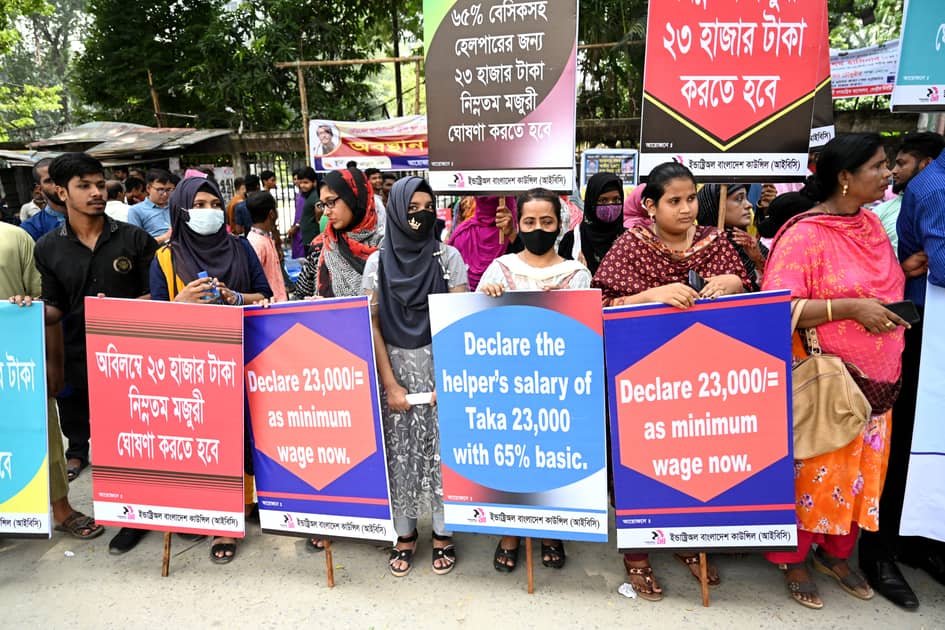
Activists from the IndustriALL Bangladesh Council hold a protest rally to demand an increase in the minimum wage for textile workers in Dhaka, Bangladesh, on 1 October 2023. Credits: STR / Nur Photo / NurPhoto via AFP
Swedish fast fashion giant H&M is understood to have told its suppliers in Bangladesh that it would be upping its unit prices following the recently announced minimum wage increase for garment workers in the region.
The company reportedly said that it would “absorb the increase in wages” in its product prices, becoming one of the first retailers operating in the country to do so, as stated by Apparel Insider, which initially published this news.
Protests erupted in Bangladesh towards the end of last month as garment workers took to the streets demanding a near-tripling of their wages.
The vast majority of employees, many working for the suppliers of global fashion retailers, were on monthly wages starting at 8,300 taka (60 pounds), leading to unrest as many mobilised on the streets surrounding the capital Dhaka.
Despite the Bangladeshi government appearing to have partially listened to the demands, increasing the wage by 51 percent to 12,500 taka (90 pounds), a number of workers’ rights organisations are calling for a reconsideration of the decision.
A similar request has also been put forward by the US government, which has urged Bangladesh to revisit the minimum wage and address the economic pressures faced by workers.
It comes following the death of a woman during the garment worker protests, Anjuara Khatun, who was killed by police, which has also seen the US and other initiatives further demand for the protections of workers’ rights.
H&M’s move to up its unit prices is a step in the right direction, despite the increase only supporting the current minimum wage. It is yet to become clear if other retailers follow suit.
Read more:
* Minimum wage for textile workers in Bangladesh up, but far below union demands
* US government urges Bangladesh to reconsider minimum wage increase
* What the new minimum wage means for garment workers in Bangladesh
http://dlvr.it/SzMVN1
Women shirts & amp; Pajamas and versatile Fashion of Amazon and Alibaba., fashion, Facebook,youtube, instagram, tweeter and google
Monday, November 27, 2023
From margins to sell-through: Important figures used in the fashion industry
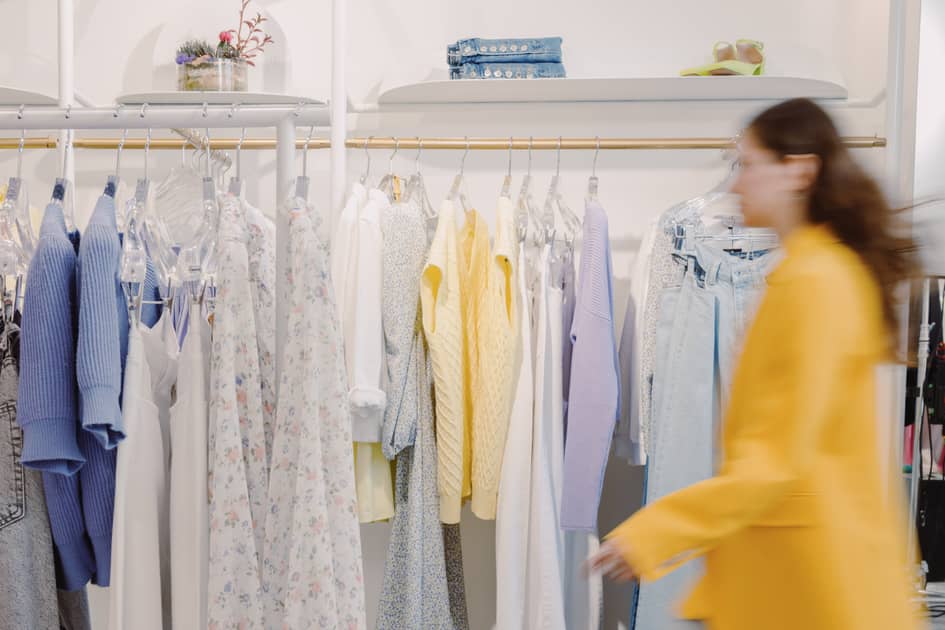
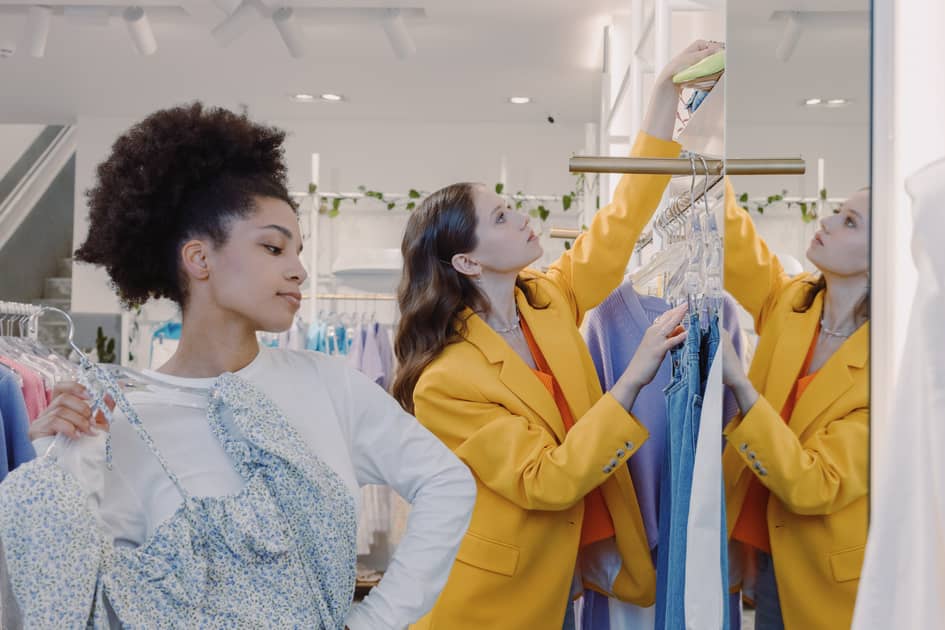
A clothing store for women's fashion. Image for illustration. Credit: Ron Lach image via Pexels.
On this page you will find key figures used in the fashion industry to monitor and optimise performance, such as sell-through, margin, and turnover, among others.
Retailers use numerical analyses to substantiate business decisions, such as making a purchasing plan and budget for the next fashion season.
“We sometimes compare choices for budgets and brands with buying shares of a company,” says independent Dutch retailer John Mulder of Mulder Mode to FashionUnited. “If a share performs well, you buy more; if a share is bad, you quit or trade less.”
Mulder adds: “As far as buying is concerned, this seems to be happening earlier and earlier, appointments in June/July for the following summer are no exception. If you had only sold 50 percent of the collection, you would miss quite a bit of data to be able to purchase properly. We therefore prefer to buy from the end of July/beginning of August in order to be able to substantiate the buying with as realistic a picture as possible.”
You can choose to read the article from beginning to end.
Or click on a term from the glossary (glossary A-Z) to go directly to it.
Glossary (A-Z)
* Gross profit margin
* Margin (purchasing margin/starting margin/net margin)
* Return / profitability
* Sales share
* Sell-through / sell-through rate
* Turnover rate / Turnover rate
We also deal with:
* Purchasing costs
* Stock value
* Writedown stock/inventory
Sell-through / Sell-through percentage / Resell percentage
What does resale mean?
Resale represents how much of the purchased collection (read: the stock/inventory) the retailer has sold to its customer, the consumer.
How do you calculate the sell-through percentage? You divide the purchase value of items sold by the purchase value of the delivered items and multiply this by 100.
For example, if the purchase value of the items sold is 10,000 euros and the purchase value of the delivered items is 20,000 euros, then the sell-through percentage is (10,000 / 20,000) x 100 percent = 50 percent. This percentage tells us that half of the purchased stock has been sold in that period.
Over the course of a season, the sell-through rate or percentage is an important indicator of how clothing brands are performing, so that adjustments can be made. For example, retailers can decide to purchase additional items that are performing above average and exchange items that are not performing as well (so-called slow movers) from the brands for other products.
Aim for a 70 percent sell-through rate
Retailers also keep track of the resale of their entire collection. Retailers aim for a 70 percent sell-through rate before the sale begins. So they try to resell 70 percent of their entire collection to the consumer, for the original price (i.e. without giving a discount).
"Our experience is that it is increasingly challenging to achieve the 70 percent for clearance sales," said store owner John Mulder of Mulder Mode. "The seasons sometimes start later (referring to the weather, ed.) and sales start earlier and earlier. With some clothing brands you are also tied to a certain budget, which can make it more difficult to realise 70 percent.” Nowadays, the sell-through percentage in fashion at the start of the sale is increasingly around 60 percent. "And this can therefore have a significant impact on the results.” (Because, if there is more clothing sold at a discount, this means less income for the retailer.)
The goal is to have a sell-through percentage of 90-95 percent by the end of the season - after the sale. (Because, keeping stock costs money, as goods quickly become less valuable. More on the written down value method, a depreciation technique later in the article, ed.)
Turnover rate
What is turnover velocity? What is turnover rate?
Sales rate and turnover rate are often used interchangeably. Both terms refer to the number of times the average inventory is sold in a given period, such as a season or a year. Turnover speed can be calculated at different levels, for example for category/product groups, brands or individual products.
How do you calculate the turnover rate? You divide the purchasing value of the turnover (this is the total cost price of all products sold in a certain period) by the average purchasing value of the stock (this is the average cost price of all products that were in stock for a certain period).
For example, if the purchasing value of sales is 100,000 euros and the average purchasing value of inventory is 25,000 euros, then the turnover ratio is (100,000 / 25,000) = 4. This means that the company's inventory has been sold four times during that period.
In general, retailers strive for a high(er) turnover rate. A low turnover rate can indicate too much inventory or products that don’t meet customer demand and can lead to a lower profit margin.
For retailers, a higher turnover rate means that money is regularly coming in from the sale of products. This improves cash flow and can lead to a higher profit margin.
Gross profit margin / profit margin / margin
What is gross profit margin?
Gross profit margin, or gross margin, is the percentage of profit a company makes on the sale of products.
How do you calculate the gross margin?
You divide by the gross profit by the turnover excluding VAT and multiply this by 100.
For example, if a company has made 10,000 euros in turnover excluding VAT and the gross profit is 3,000 euros, then the gross margin is 30 percent. This means that the company has made a 30 percent profit on product sales.
Retailers generally strive for a high gross margin. A higher gross margin means that a retailer keeps a larger portion of the sales price as profit.
There are various ways in which fashion retailers can increase their gross margin, such as reducing purchasing costs (see purchasing costs).
Profitability / Return
What is profitability?
Profitability is a way of measuring how well a fashion company manages to make a profit with the resources it has (invested). Often, profitability is understood for all the clothing brands a retailer sells.
How do you calculate profitability? The key figure takes into account two important factors: the turnover rate and the margin.
You divide the gross profit of the turnover by the purchasing value of the turnover and multiply this by the turnover rate.
Suppose the outcome is a profitability of 20 percent. This means that the retailer has made a profit of 20 pence for every pound invested.
The higher the profitability, the more efficiently a company uses its resources to make a profit. Here too, the general aim is for a high return/profitability.
Sales share
What is turnover share?
Sales share is the percentage of a fashion company's total revenue that is generated by a specific brand, product, category or segment. It therefore provides insight into performance.
How do you calculate turnover share? For example, you take the turnover of a fashion brand in a certain period (say a month, quarter or year), divide this by the total turnover and multiply this by 100.
Suppose the total turnover of a retailer's clothing store last month was 50,000 euros and the turnover of brand 'X' in the same period was 10,000 euros. Then he divides 10,000 by 50,000 x 100 percent = 20 percent. This means that brand X was responsible for 20 percent of the clothing store's total turnover in the past month.
A high revenue share may mean that a product or brand is popular and selling well, while a low revenue share may indicate less popularity and less demand in the market. But beware, “it does not mean that a small turnover share automatically means that a brand is performing poorly”, Dutch retail organisation INretail emphasises in its report 'How do you prepare for the Fashion purchasing season?'. Some brands can make a smaller contribution to turnover, but are still important to the total offering of the store.
Margin (startmargin and netmargin)
What is a starting margin?
When people talk about margin, it is often about the buying margin or starting margin as it is called.
How do you calculate margin? Purchase price (excl. VAT) multiplied by the margin equals the sales price incl. VAT.
In fashion, the margin - also called the calculation number or factor - is often around 2.7. For example, a supplier, say a fashion brand X sells a pair of trousers to the retailer for 20 euros (i.e. it costs the retailer 20 euros to buy the trousers). Then you take the margin 2.7 and multiply it and you arrive at the recommended retail price. So these trousers are in the store for 54 euros.
The text continues below the visual
Visualisation of margin. Credits: FashionUnited
This factor is important to retailers because it gives them information about how much money can be made on the sale of the garment to the consumer. The higher the margin, the more money can be made. Provided the garments are actually sold.
Which brings us to net margin.
The net margin is more important than the starting margin, because it can be high but if the retailer doesn’t sell the item, it brings in nothing. Net margin is the margin after seasonal adjustments, i.e. after replenishment or withdrawing [of clothing from fashion brands, ed.] in response to the results. In other words, the actual margin, at the end of the season.
The text continues below the photo
A clothing store for women's fashion. Image for illustration. Credit: image Ron Lach via Pexels
We will explain a few more terms/figures:
Buying costs
Buying costs are the costs that a fashion retailer incurs when buying clothing and accessories. These are, of course, the costs of the products themselves, but also consider, for instance, possible import duties, transport and/or packaging costs.
Purchasing costs are an important part of a retailer's total costs and therefore have a (major) impact on the profitability of the clothing store. (Because, sales - costs = profit/loss)
Inventory value
Inventory value refers to the value of the total inventory held by a fashion retailer. The inventory value is an important figure because it is directly related to the financial health of the company.
An inventory value that is too high can mean there is too much stock that is not being sold quickly enough, which could jeopardise the company's cash flow. Too low an inventory value could mean that the company does not have enough stock to meet customer demand, missing out on potential sales.
Write-down stock
What is inventory write-down?
The accounting term write-down refers to reducing the value of the unsold clothing items in stock. After all, clothing is trend-sensitive, goods become outdated quickly and go 'out of fashion'. The longer the product remains in stock, the less it is worth. Ultimately these products become unsellable.
For textiles and clothing in the Netherlands, mandatory depreciation percentages have been set by the tax authorities. “The depreciation percentages for women's and men's fashion and shoes differ,” says John Mulder. (In the UK, clothing, accessories and footwear are subject to the standard 20 percent VAT, however, zero rate VAT is applied to babywear, and children’s clothes and footwear, ed.)
Retailers try to minimise inventory write-downs / stock depreciation through effective stock management.
Sources:
- Interview with John Mulder, co-owner of fashion store Mulder Mode in Waddinxveen, June 1, 2023
- Website trade organisation INretail and the report 'How do you prepare for the Fashion purchasing season?' which was released for members on December 3, 2020
- Content from the FashionUnited archive and specifically the articles 'Being an independent retailer: this is what it takes to run a fashion store', January 25, 2023 and 'What does a fashion agent do?', November 24, 2022
- TMO Fashion Business School as attended by the author of the article
- Belastingdienst.nl 'Valuation of stock in your company', consulted in June 2023
- Gov.uk VAT rates on different goods and services, consulted in October 2023
- Parts of this article text were generated with an artificial intelligence (AI) tool and then edited.
A clothing store for women's fashion. Image for illustration. Credit: image Ron Lach via Pexels
Also read:
* From fibre to garment: the technical 'make-up' of your clothing
* The contrast between haute couture and ready-to-wear
* Tips for building a more sustainable wardrobe
* Jeans and denim: everything you need to know about jeans
* The role of colour in fashion
* This is how a fashion brand’s collection is created
* Everything about the traditional supply chain and the core players of fashion industry
* How fashion trends find their way into our wardrobe
* What are fashion trade shows and when do they take place?
* Everything about the traditional supply chain and the core players of fashion industry
http://dlvr.it/SzM9dq
On this page you will find key figures used in the fashion industry to monitor and optimise performance, such as sell-through, margin, and turnover, among others.
Retailers use numerical analyses to substantiate business decisions, such as making a purchasing plan and budget for the next fashion season.
“We sometimes compare choices for budgets and brands with buying shares of a company,” says independent Dutch retailer John Mulder of Mulder Mode to FashionUnited. “If a share performs well, you buy more; if a share is bad, you quit or trade less.”
Mulder adds: “As far as buying is concerned, this seems to be happening earlier and earlier, appointments in June/July for the following summer are no exception. If you had only sold 50 percent of the collection, you would miss quite a bit of data to be able to purchase properly. We therefore prefer to buy from the end of July/beginning of August in order to be able to substantiate the buying with as realistic a picture as possible.”
You can choose to read the article from beginning to end.
Or click on a term from the glossary (glossary A-Z) to go directly to it.
Glossary (A-Z)
* Gross profit margin
* Margin (purchasing margin/starting margin/net margin)
* Return / profitability
* Sales share
* Sell-through / sell-through rate
* Turnover rate / Turnover rate
We also deal with:
* Purchasing costs
* Stock value
* Writedown stock/inventory
Sell-through / Sell-through percentage / Resell percentage
What does resale mean?
Resale represents how much of the purchased collection (read: the stock/inventory) the retailer has sold to its customer, the consumer.
How do you calculate the sell-through percentage? You divide the purchase value of items sold by the purchase value of the delivered items and multiply this by 100.
For example, if the purchase value of the items sold is 10,000 euros and the purchase value of the delivered items is 20,000 euros, then the sell-through percentage is (10,000 / 20,000) x 100 percent = 50 percent. This percentage tells us that half of the purchased stock has been sold in that period.
Over the course of a season, the sell-through rate or percentage is an important indicator of how clothing brands are performing, so that adjustments can be made. For example, retailers can decide to purchase additional items that are performing above average and exchange items that are not performing as well (so-called slow movers) from the brands for other products.
Aim for a 70 percent sell-through rate
Retailers also keep track of the resale of their entire collection. Retailers aim for a 70 percent sell-through rate before the sale begins. So they try to resell 70 percent of their entire collection to the consumer, for the original price (i.e. without giving a discount).
"Our experience is that it is increasingly challenging to achieve the 70 percent for clearance sales," said store owner John Mulder of Mulder Mode. "The seasons sometimes start later (referring to the weather, ed.) and sales start earlier and earlier. With some clothing brands you are also tied to a certain budget, which can make it more difficult to realise 70 percent.” Nowadays, the sell-through percentage in fashion at the start of the sale is increasingly around 60 percent. "And this can therefore have a significant impact on the results.” (Because, if there is more clothing sold at a discount, this means less income for the retailer.)
The goal is to have a sell-through percentage of 90-95 percent by the end of the season - after the sale. (Because, keeping stock costs money, as goods quickly become less valuable. More on the written down value method, a depreciation technique later in the article, ed.)
Turnover rate
What is turnover velocity? What is turnover rate?
Sales rate and turnover rate are often used interchangeably. Both terms refer to the number of times the average inventory is sold in a given period, such as a season or a year. Turnover speed can be calculated at different levels, for example for category/product groups, brands or individual products.
How do you calculate the turnover rate? You divide the purchasing value of the turnover (this is the total cost price of all products sold in a certain period) by the average purchasing value of the stock (this is the average cost price of all products that were in stock for a certain period).
For example, if the purchasing value of sales is 100,000 euros and the average purchasing value of inventory is 25,000 euros, then the turnover ratio is (100,000 / 25,000) = 4. This means that the company's inventory has been sold four times during that period.
In general, retailers strive for a high(er) turnover rate. A low turnover rate can indicate too much inventory or products that don’t meet customer demand and can lead to a lower profit margin.
For retailers, a higher turnover rate means that money is regularly coming in from the sale of products. This improves cash flow and can lead to a higher profit margin.
Gross profit margin / profit margin / margin
What is gross profit margin?
Gross profit margin, or gross margin, is the percentage of profit a company makes on the sale of products.
How do you calculate the gross margin?
You divide by the gross profit by the turnover excluding VAT and multiply this by 100.
For example, if a company has made 10,000 euros in turnover excluding VAT and the gross profit is 3,000 euros, then the gross margin is 30 percent. This means that the company has made a 30 percent profit on product sales.
Retailers generally strive for a high gross margin. A higher gross margin means that a retailer keeps a larger portion of the sales price as profit.
There are various ways in which fashion retailers can increase their gross margin, such as reducing purchasing costs (see purchasing costs).
Profitability / Return
What is profitability?
Profitability is a way of measuring how well a fashion company manages to make a profit with the resources it has (invested). Often, profitability is understood for all the clothing brands a retailer sells.
How do you calculate profitability? The key figure takes into account two important factors: the turnover rate and the margin.
You divide the gross profit of the turnover by the purchasing value of the turnover and multiply this by the turnover rate.
Suppose the outcome is a profitability of 20 percent. This means that the retailer has made a profit of 20 pence for every pound invested.
The higher the profitability, the more efficiently a company uses its resources to make a profit. Here too, the general aim is for a high return/profitability.
Sales share
What is turnover share?
Sales share is the percentage of a fashion company's total revenue that is generated by a specific brand, product, category or segment. It therefore provides insight into performance.
How do you calculate turnover share? For example, you take the turnover of a fashion brand in a certain period (say a month, quarter or year), divide this by the total turnover and multiply this by 100.
Suppose the total turnover of a retailer's clothing store last month was 50,000 euros and the turnover of brand 'X' in the same period was 10,000 euros. Then he divides 10,000 by 50,000 x 100 percent = 20 percent. This means that brand X was responsible for 20 percent of the clothing store's total turnover in the past month.
A high revenue share may mean that a product or brand is popular and selling well, while a low revenue share may indicate less popularity and less demand in the market. But beware, “it does not mean that a small turnover share automatically means that a brand is performing poorly”, Dutch retail organisation INretail emphasises in its report 'How do you prepare for the Fashion purchasing season?'. Some brands can make a smaller contribution to turnover, but are still important to the total offering of the store.
Margin (startmargin and netmargin)
What is a starting margin?
When people talk about margin, it is often about the buying margin or starting margin as it is called.
How do you calculate margin? Purchase price (excl. VAT) multiplied by the margin equals the sales price incl. VAT.
In fashion, the margin - also called the calculation number or factor - is often around 2.7. For example, a supplier, say a fashion brand X sells a pair of trousers to the retailer for 20 euros (i.e. it costs the retailer 20 euros to buy the trousers). Then you take the margin 2.7 and multiply it and you arrive at the recommended retail price. So these trousers are in the store for 54 euros.
The text continues below the visual
Visualisation of margin. Credits: FashionUnited
This factor is important to retailers because it gives them information about how much money can be made on the sale of the garment to the consumer. The higher the margin, the more money can be made. Provided the garments are actually sold.
Which brings us to net margin.
The net margin is more important than the starting margin, because it can be high but if the retailer doesn’t sell the item, it brings in nothing. Net margin is the margin after seasonal adjustments, i.e. after replenishment or withdrawing [of clothing from fashion brands, ed.] in response to the results. In other words, the actual margin, at the end of the season.
The text continues below the photo
A clothing store for women's fashion. Image for illustration. Credit: image Ron Lach via Pexels
We will explain a few more terms/figures:
Buying costs
Buying costs are the costs that a fashion retailer incurs when buying clothing and accessories. These are, of course, the costs of the products themselves, but also consider, for instance, possible import duties, transport and/or packaging costs.
Purchasing costs are an important part of a retailer's total costs and therefore have a (major) impact on the profitability of the clothing store. (Because, sales - costs = profit/loss)
Inventory value
Inventory value refers to the value of the total inventory held by a fashion retailer. The inventory value is an important figure because it is directly related to the financial health of the company.
An inventory value that is too high can mean there is too much stock that is not being sold quickly enough, which could jeopardise the company's cash flow. Too low an inventory value could mean that the company does not have enough stock to meet customer demand, missing out on potential sales.
Write-down stock
What is inventory write-down?
The accounting term write-down refers to reducing the value of the unsold clothing items in stock. After all, clothing is trend-sensitive, goods become outdated quickly and go 'out of fashion'. The longer the product remains in stock, the less it is worth. Ultimately these products become unsellable.
For textiles and clothing in the Netherlands, mandatory depreciation percentages have been set by the tax authorities. “The depreciation percentages for women's and men's fashion and shoes differ,” says John Mulder. (In the UK, clothing, accessories and footwear are subject to the standard 20 percent VAT, however, zero rate VAT is applied to babywear, and children’s clothes and footwear, ed.)
Retailers try to minimise inventory write-downs / stock depreciation through effective stock management.
Sources:
- Interview with John Mulder, co-owner of fashion store Mulder Mode in Waddinxveen, June 1, 2023
- Website trade organisation INretail and the report 'How do you prepare for the Fashion purchasing season?' which was released for members on December 3, 2020
- Content from the FashionUnited archive and specifically the articles 'Being an independent retailer: this is what it takes to run a fashion store', January 25, 2023 and 'What does a fashion agent do?', November 24, 2022
- TMO Fashion Business School as attended by the author of the article
- Belastingdienst.nl 'Valuation of stock in your company', consulted in June 2023
- Gov.uk VAT rates on different goods and services, consulted in October 2023
- Parts of this article text were generated with an artificial intelligence (AI) tool and then edited.
A clothing store for women's fashion. Image for illustration. Credit: image Ron Lach via Pexels
Also read:
* From fibre to garment: the technical 'make-up' of your clothing
* The contrast between haute couture and ready-to-wear
* Tips for building a more sustainable wardrobe
* Jeans and denim: everything you need to know about jeans
* The role of colour in fashion
* This is how a fashion brand’s collection is created
* Everything about the traditional supply chain and the core players of fashion industry
* How fashion trends find their way into our wardrobe
* What are fashion trade shows and when do they take place?
* Everything about the traditional supply chain and the core players of fashion industry
http://dlvr.it/SzM9dq
Black Friday 2023 marks record online spending in the UK
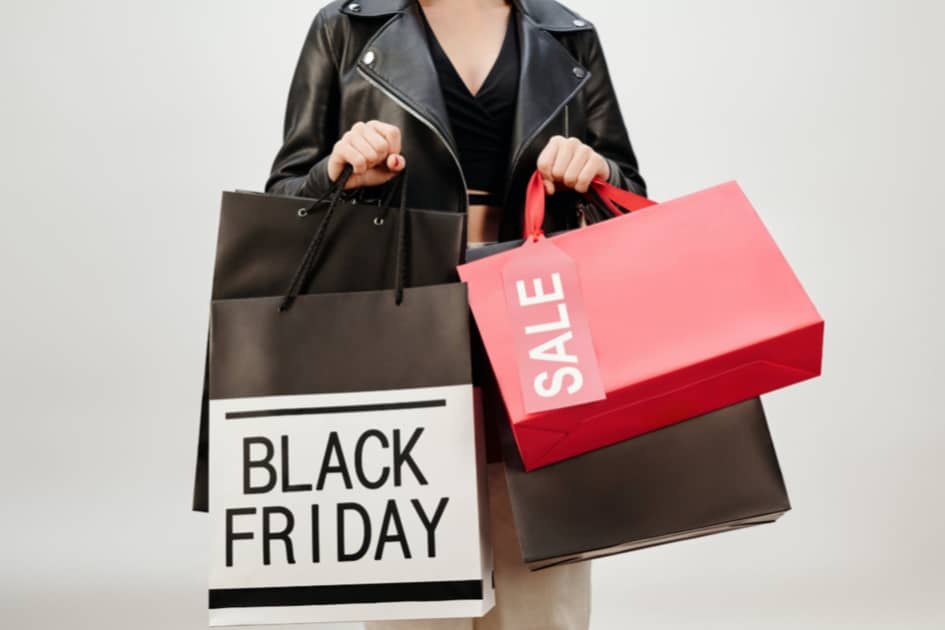
Black Friday Credits: Pexels
In the UK, Black Friday emerged as the most significant online shopping day of 2023 so far, with consumers spending 1.04 billion pounds online, marking a 4.1 percent year-over-year increase. Adobe Analytics, employed by many major retailers to enhance online shopping experiences, was used by the Adobe Digital Insights team to analyse millions of visits to retail sites, tracking prices across 100 million SKUs in 18 product categories.
Vivek Pandya, lead analyst at Adobe Digital Insights, highlighted the ongoing importance of Black Friday for both retailers, boosting sales during the crucial holiday trading period, and consumers seeking opportunities to maximize savings.
According to UK Black Friday online spending data from Adobe Analytics:
*
Holiday season spending from November 1 to November 24 reached 9.6 billion pounds, showing a 4.7 percent increase from 2022.
*
UK shoppers used Buy Now Pay Later services to spend 101 million pounds on Black Friday, comprising 9.7 percent of the total online spend for the day, and marking a 3.4 percent increase from Black Friday 2022. BNPL holiday season spending-to-date (Nov 1 – 24) is 1.3 billion pounds.
*
Popular products included Micro scooters, puzzles, jelly cats, slippers, gift boxes, jewellery, and personal care items like face creams and lotions.
Average online prices saw a 12 percent discount compared to pre-holiday season levels, with the most substantial discounts apparel offered 14 percent cheaper.
*
Click and collect usage rose to 8 percent of orders on Black Friday (for retailers offering the service), up from 6.4 percent the previous year, indicating a 24.7 percent growth in service utilisation.
*
In London, total online Black Friday spending reached 251 million pounds, showing a 4.6 percent year-over-year increase.
As Black Friday emerged as the pinnacle of online shopping in the UK for 2023, the robust 1.04 billion pounds spending reflects the consumer appetite for seizing compelling discounts.
http://dlvr.it/SzM9S9
In the UK, Black Friday emerged as the most significant online shopping day of 2023 so far, with consumers spending 1.04 billion pounds online, marking a 4.1 percent year-over-year increase. Adobe Analytics, employed by many major retailers to enhance online shopping experiences, was used by the Adobe Digital Insights team to analyse millions of visits to retail sites, tracking prices across 100 million SKUs in 18 product categories.
Vivek Pandya, lead analyst at Adobe Digital Insights, highlighted the ongoing importance of Black Friday for both retailers, boosting sales during the crucial holiday trading period, and consumers seeking opportunities to maximize savings.
According to UK Black Friday online spending data from Adobe Analytics:
*
Holiday season spending from November 1 to November 24 reached 9.6 billion pounds, showing a 4.7 percent increase from 2022.
*
UK shoppers used Buy Now Pay Later services to spend 101 million pounds on Black Friday, comprising 9.7 percent of the total online spend for the day, and marking a 3.4 percent increase from Black Friday 2022. BNPL holiday season spending-to-date (Nov 1 – 24) is 1.3 billion pounds.
*
Popular products included Micro scooters, puzzles, jelly cats, slippers, gift boxes, jewellery, and personal care items like face creams and lotions.
Average online prices saw a 12 percent discount compared to pre-holiday season levels, with the most substantial discounts apparel offered 14 percent cheaper.
*
Click and collect usage rose to 8 percent of orders on Black Friday (for retailers offering the service), up from 6.4 percent the previous year, indicating a 24.7 percent growth in service utilisation.
*
In London, total online Black Friday spending reached 251 million pounds, showing a 4.6 percent year-over-year increase.
As Black Friday emerged as the pinnacle of online shopping in the UK for 2023, the robust 1.04 billion pounds spending reflects the consumer appetite for seizing compelling discounts.
http://dlvr.it/SzM9S9
Saturday, November 25, 2023
Hackett London opens new store dedicated to premium line
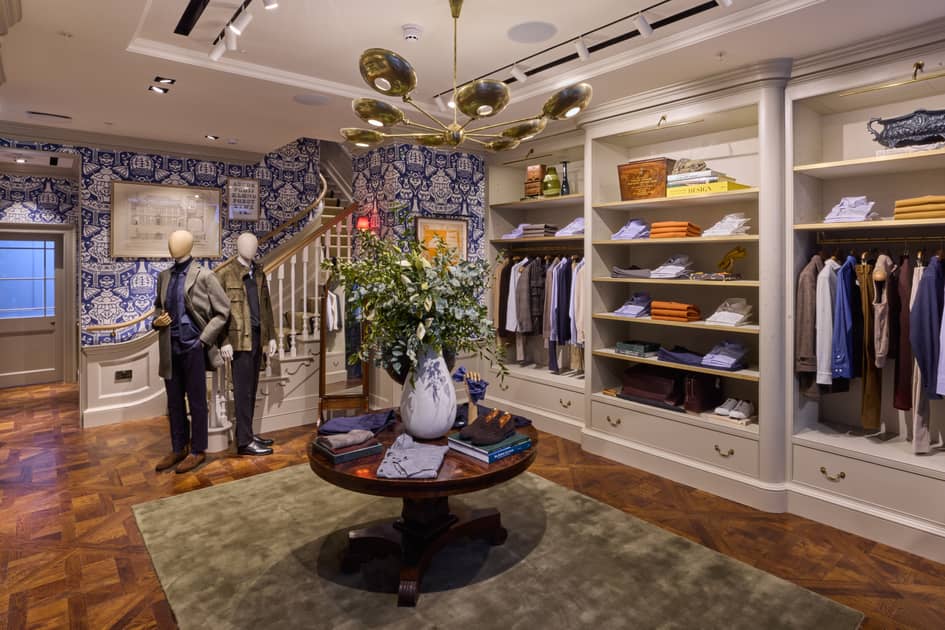
Hackett London New Bond Street store Credits: Hackett London
Interview
Heritage British brand Hackett London, part of Spain-based fashion group AWWG, has opened a new store on New Bond Street, the world’s first to be fully dedicated to its premium Savile Row ready-to-wear collection.
The new location at 69 New Bond Street is part of the menswear brand’s strategy to drive brand recognition and allow its premium ready-to-wear line “to breathe,” said Gianni Colarossi, vice president of Hackett Product at AWWG in an interview with FashionUnited.
Colarossi, added: “No.14 Savile Row Collection is effortless elegance, never contrived or forced, just beautifully tailored clothing, and the Bond Street store allows us to fully spotlight our growing collection, which each season keeps developing into a full lifestyle offering.”
The new 2,350 square foot store has been designed to not only test the market for its aspirational premium offering but to complement its other West End locations, including its Savile Row townhouse, where its atelier is located for custom made-to-measure suits, and its Regent Street and Jermyn Street stores.
Hackett London's Gianni Colarossi and Dan Slater in the New Bond Street store Credits: Hackett London
“This store shows how Hackett is evolving,” explained Dan Slater, vice president of Hackett Retail at AWWG on a tour of the store. “No two Hackett stores are the same, and we wanted a location to sit among our peers, and there is no better location or stronger statement than opening on Bond Street.”
Described as a “hub for men with taste who value the blend of traditional craftsmanship with a contemporary feel,” the two-storey boutique blends classic and contemporary design detailing, elevating the Georgian architecture that is part of Hackett’s heritage with mid-century modern soft furniture and contemporary British design wallpapers and artwork by Hormazd Narielwalla.
There are also vintage and unique décor pieces inspired by founder Jeremy Hackett’s “passion for exploration, discovery and antiques”.
Hackett London New Bond Street store Credits: Hackett London
The design also features familiar elements from Hackett’s 14 Savile Row townhouse, including the striking emerald-green panelled walls of its member's room, which now adorns the first-floor space with a large window overlooking Bond Street.
Slater said: “We wanted to translate the Savile Row townhouse on a smaller scale, highlighting our heritage and charm in a welcoming way to really showcase the Savile Row collection, and make it an experience for new and returning customers.”
Hackett London driving brand aspiration with new Bond Street store dedicated to No.14 Savile Row Collection
The store also offers personal tailoring, made-to-measure and bespoke services, as well as in-house barber and grooming services on the first floor.
Colarossi added: “Bond Street has been designed to slow the retail experience down. We want to offer the consumer comfort and show him he’s in good hands. He can peruse and try on the collection and have a coffee or a shave."
The Bond Street location will also be used to fulfil e-commerce orders for the No.14 Savile Row collection "for better customer service," said Slater.
Hackett London New Bond Street store Credits: Hackett London
The Hackett Savile Row ready-to-wear collection is the premium line within the Hackett clothing range, sitting alongside Hackett London, Hackett Sport, and its bespoke services on Savile Row. The collection, designed by Colarossi, embodies the brand's tailoring roots while developing into a full lifestyle offering, featuring shirts, suits and chinos, as well as outerwear, blazers, polos and knitwear.
“The goal is to offer a collection that’s modern and relevant,” adds Colarossi. “To create a lifestyle line where we can dress from a black-tie event to the weekend, interpreting what men want to wear now.”
This is translated into an autumn/winter 2023 collection filled with seasonal colours of ecrus, browns and greens that are paired back with rich navy and warm greys. These colours are seen across coats, suits and jackets, in wools, silks and cashmere, with layering items in cotton, silk blends, and merino. The collection also includes a capsule of hybrid outerwear and a range of partywear for the upcoming holiday season.
“Hackett London will always be the majority of our sales, but with the Savile Row line we are developing our brand positioning, while offering that element of aspiration and feeding the appetite we see from consumers looking for traditional yet contemporary options,” added Colarossi.
Hackett London New Bond Street store Credits: Hackett London
http://dlvr.it/SzHm3Y
Interview
Heritage British brand Hackett London, part of Spain-based fashion group AWWG, has opened a new store on New Bond Street, the world’s first to be fully dedicated to its premium Savile Row ready-to-wear collection.
The new location at 69 New Bond Street is part of the menswear brand’s strategy to drive brand recognition and allow its premium ready-to-wear line “to breathe,” said Gianni Colarossi, vice president of Hackett Product at AWWG in an interview with FashionUnited.
Colarossi, added: “No.14 Savile Row Collection is effortless elegance, never contrived or forced, just beautifully tailored clothing, and the Bond Street store allows us to fully spotlight our growing collection, which each season keeps developing into a full lifestyle offering.”
The new 2,350 square foot store has been designed to not only test the market for its aspirational premium offering but to complement its other West End locations, including its Savile Row townhouse, where its atelier is located for custom made-to-measure suits, and its Regent Street and Jermyn Street stores.
Hackett London's Gianni Colarossi and Dan Slater in the New Bond Street store Credits: Hackett London
“This store shows how Hackett is evolving,” explained Dan Slater, vice president of Hackett Retail at AWWG on a tour of the store. “No two Hackett stores are the same, and we wanted a location to sit among our peers, and there is no better location or stronger statement than opening on Bond Street.”
Described as a “hub for men with taste who value the blend of traditional craftsmanship with a contemporary feel,” the two-storey boutique blends classic and contemporary design detailing, elevating the Georgian architecture that is part of Hackett’s heritage with mid-century modern soft furniture and contemporary British design wallpapers and artwork by Hormazd Narielwalla.
There are also vintage and unique décor pieces inspired by founder Jeremy Hackett’s “passion for exploration, discovery and antiques”.
Hackett London New Bond Street store Credits: Hackett London
The design also features familiar elements from Hackett’s 14 Savile Row townhouse, including the striking emerald-green panelled walls of its member's room, which now adorns the first-floor space with a large window overlooking Bond Street.
Slater said: “We wanted to translate the Savile Row townhouse on a smaller scale, highlighting our heritage and charm in a welcoming way to really showcase the Savile Row collection, and make it an experience for new and returning customers.”
Hackett London driving brand aspiration with new Bond Street store dedicated to No.14 Savile Row Collection
The store also offers personal tailoring, made-to-measure and bespoke services, as well as in-house barber and grooming services on the first floor.
Colarossi added: “Bond Street has been designed to slow the retail experience down. We want to offer the consumer comfort and show him he’s in good hands. He can peruse and try on the collection and have a coffee or a shave."
The Bond Street location will also be used to fulfil e-commerce orders for the No.14 Savile Row collection "for better customer service," said Slater.
Hackett London New Bond Street store Credits: Hackett London
The Hackett Savile Row ready-to-wear collection is the premium line within the Hackett clothing range, sitting alongside Hackett London, Hackett Sport, and its bespoke services on Savile Row. The collection, designed by Colarossi, embodies the brand's tailoring roots while developing into a full lifestyle offering, featuring shirts, suits and chinos, as well as outerwear, blazers, polos and knitwear.
“The goal is to offer a collection that’s modern and relevant,” adds Colarossi. “To create a lifestyle line where we can dress from a black-tie event to the weekend, interpreting what men want to wear now.”
This is translated into an autumn/winter 2023 collection filled with seasonal colours of ecrus, browns and greens that are paired back with rich navy and warm greys. These colours are seen across coats, suits and jackets, in wools, silks and cashmere, with layering items in cotton, silk blends, and merino. The collection also includes a capsule of hybrid outerwear and a range of partywear for the upcoming holiday season.
“Hackett London will always be the majority of our sales, but with the Savile Row line we are developing our brand positioning, while offering that element of aspiration and feeding the appetite we see from consumers looking for traditional yet contemporary options,” added Colarossi.
Hackett London New Bond Street store Credits: Hackett London
http://dlvr.it/SzHm3Y
Gucci amplifies battle against US counterfeiters
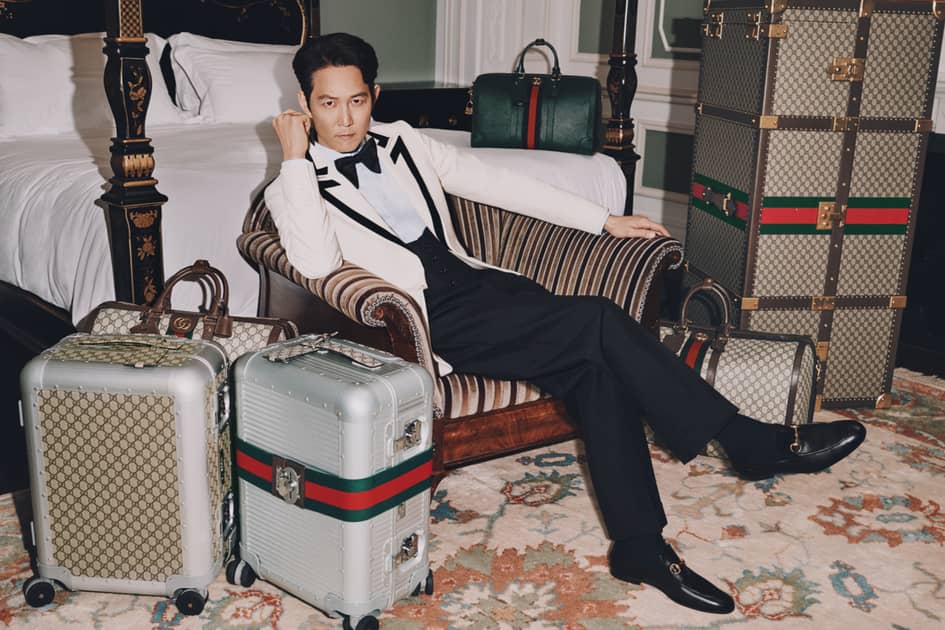
Gucci luggage campaign with Jungjae Lee Credits: Gucci, photo by Hanna Moon
Gucci is escalating its efforts to combat counterfeiting, initiating legal action against three U.S. retailers: Sam's Club, Century 21, and Lord & Taylor.
The lawsuits, filed by Gucci's American division in federal court in Manhattan, allege these retailers' involvement in the illicit sale of counterfeit Gucci products. The luxury brand underscores its dedication to safeguarding customers from counterfeit sales and emphasizes a comprehensive investigation preceding the legal proceedings.
In the lawsuit against Lord & Taylor, Gucci highlights its significant advertising investment in promoting the brand in the U.S., underscoring the market's importance. Gucci is pursuing injunctions and financial compensation, citing trademark infringement and unfair competition by the retailers. The legal action also calls for the surrender and potential destruction of counterfeit items.
Gucci's investigations involved purchases from the retailers' websites, revealing the inauthentic nature of the products. While Lord & Taylor remains silent on the matter, Sam's Club acknowledges removing the identified products and plans to address the complaint in court. Century 21 has chosen not to provide a statement.
Gucci's ongoing battle against counterfeiting reflects the broader challenge faced by luxury brands dealing with unauthorized reproductions through various distribution channels. Gucci, a frequent target of counterfeiting, has previously secured legal protection for its iconic 'green-red-green ribbon' and engaged in collaborations, such as the one with Facebook in 2021, to protect its intellectual property.
http://dlvr.it/SzHlsQ
Gucci is escalating its efforts to combat counterfeiting, initiating legal action against three U.S. retailers: Sam's Club, Century 21, and Lord & Taylor.
The lawsuits, filed by Gucci's American division in federal court in Manhattan, allege these retailers' involvement in the illicit sale of counterfeit Gucci products. The luxury brand underscores its dedication to safeguarding customers from counterfeit sales and emphasizes a comprehensive investigation preceding the legal proceedings.
In the lawsuit against Lord & Taylor, Gucci highlights its significant advertising investment in promoting the brand in the U.S., underscoring the market's importance. Gucci is pursuing injunctions and financial compensation, citing trademark infringement and unfair competition by the retailers. The legal action also calls for the surrender and potential destruction of counterfeit items.
Gucci's investigations involved purchases from the retailers' websites, revealing the inauthentic nature of the products. While Lord & Taylor remains silent on the matter, Sam's Club acknowledges removing the identified products and plans to address the complaint in court. Century 21 has chosen not to provide a statement.
Gucci's ongoing battle against counterfeiting reflects the broader challenge faced by luxury brands dealing with unauthorized reproductions through various distribution channels. Gucci, a frequent target of counterfeiting, has previously secured legal protection for its iconic 'green-red-green ribbon' and engaged in collaborations, such as the one with Facebook in 2021, to protect its intellectual property.
http://dlvr.it/SzHlsQ
Friday, November 24, 2023
Former Google exec joins Coty as chief digital officer
Coty steps into the metaverse with Coty Campus. Credits: Coty.
Pierric Duithot, a former executive of Google and director at Meta, has been named as the newest chief digital officer for beauty and cosmetics giant Coty.
The conglomerate, which owns the likes of Kylie Cosmetics and Rimmel, announced the appointment via its official LinkedIn page, where it said Duthoit would be taking up the role from December 1.
It continued: “Pierric’s previous experience of growing digital and FMCG [fast-moving consumer goods] businesses at an international scale strongly complements Coty’s strategic digital priorities.”
Duthoit joins Coty from social media firm Meta, where he most recently served as business director France over the course of one year.
Prior to Meta, he further held executive positions at Google, including industry director of a number of divisions for the Middle East, North Africa.
Duthoit also boasts experience within the fashion industry, namely at Patagonia, where he served as consultant for Russia for two years, and at Russian fashion platform Woman Journal, where he was CEO for nearly five years.
His appointment at Coty comes at a time when the beauty group, which has only recently secured a second stock exchange listing in Paris, has been upping its efforts in the realm of the digital world.
Among its initiatives, the company has worked with tech giants like Perfect Corp to introduce virtual try-on features for its brands, and has launched its own virtual world which employees are encouraged to utilise in order to gain a wider understanding of the metaverse as a whole.
Read more:
* How beauty retail is leading the way in tech innovation
http://dlvr.it/SzFrw6
Pierric Duithot, a former executive of Google and director at Meta, has been named as the newest chief digital officer for beauty and cosmetics giant Coty.
The conglomerate, which owns the likes of Kylie Cosmetics and Rimmel, announced the appointment via its official LinkedIn page, where it said Duthoit would be taking up the role from December 1.
It continued: “Pierric’s previous experience of growing digital and FMCG [fast-moving consumer goods] businesses at an international scale strongly complements Coty’s strategic digital priorities.”
Duthoit joins Coty from social media firm Meta, where he most recently served as business director France over the course of one year.
Prior to Meta, he further held executive positions at Google, including industry director of a number of divisions for the Middle East, North Africa.
Duthoit also boasts experience within the fashion industry, namely at Patagonia, where he served as consultant for Russia for two years, and at Russian fashion platform Woman Journal, where he was CEO for nearly five years.
His appointment at Coty comes at a time when the beauty group, which has only recently secured a second stock exchange listing in Paris, has been upping its efforts in the realm of the digital world.
Among its initiatives, the company has worked with tech giants like Perfect Corp to introduce virtual try-on features for its brands, and has launched its own virtual world which employees are encouraged to utilise in order to gain a wider understanding of the metaverse as a whole.
Read more:
* How beauty retail is leading the way in tech innovation
http://dlvr.it/SzFrw6
Roots appoints new chief marketing officer
Credits: Roots Facebook
Canadian lifestyle brand Roots Corporation has announced the appointment of Leslie Golts as its new chief marketing officer.
She ultimately brings to the table over 15 years of experience, Roots said in a release, particularly surrounding marketing and communications leadership.
Golts joins the company from Unilever Canada’s Beauty and Wellness Business Unit, where she served as general manager and head of marketing.
At the cosmetics giant, Golts was credited with helping to drive profitable growth and “ensuring brand success across diverse categories”.
Prior to this, she also held a series of managerial positions at L’Oréal Canada, and had played a “key role” in the development of global campaigns for the Dove brand.
Speaking on the appointment, Meghan Roach, president and chief executive officer at Roots, said: "Leslie brings a wealth of experience and proven success in building iconic brands to Roots.
"She is a talented leader that will play a critical role in advancing the company's marketing initiatives and reinforcing its position in the market. With her deep life-long love for Roots, she is an excellent cultural fit, and we are pleased to welcome her to the team."
Golts further commented on the new role, adding: "I am thrilled to be part of the Roots Corporation family and excited about the opportunities to elevate the brand to new heights.
"Roots has a rich history, and I look forward to collaborating with the team to create compelling marketing strategies that resonate with our diverse audience."
http://dlvr.it/SzFrWl
Canadian lifestyle brand Roots Corporation has announced the appointment of Leslie Golts as its new chief marketing officer.
She ultimately brings to the table over 15 years of experience, Roots said in a release, particularly surrounding marketing and communications leadership.
Golts joins the company from Unilever Canada’s Beauty and Wellness Business Unit, where she served as general manager and head of marketing.
At the cosmetics giant, Golts was credited with helping to drive profitable growth and “ensuring brand success across diverse categories”.
Prior to this, she also held a series of managerial positions at L’Oréal Canada, and had played a “key role” in the development of global campaigns for the Dove brand.
Speaking on the appointment, Meghan Roach, president and chief executive officer at Roots, said: "Leslie brings a wealth of experience and proven success in building iconic brands to Roots.
"She is a talented leader that will play a critical role in advancing the company's marketing initiatives and reinforcing its position in the market. With her deep life-long love for Roots, she is an excellent cultural fit, and we are pleased to welcome her to the team."
Golts further commented on the new role, adding: "I am thrilled to be part of the Roots Corporation family and excited about the opportunities to elevate the brand to new heights.
"Roots has a rich history, and I look forward to collaborating with the team to create compelling marketing strategies that resonate with our diverse audience."
http://dlvr.it/SzFrWl
Stella McCartney appoints Amandine Ohayon as CEO
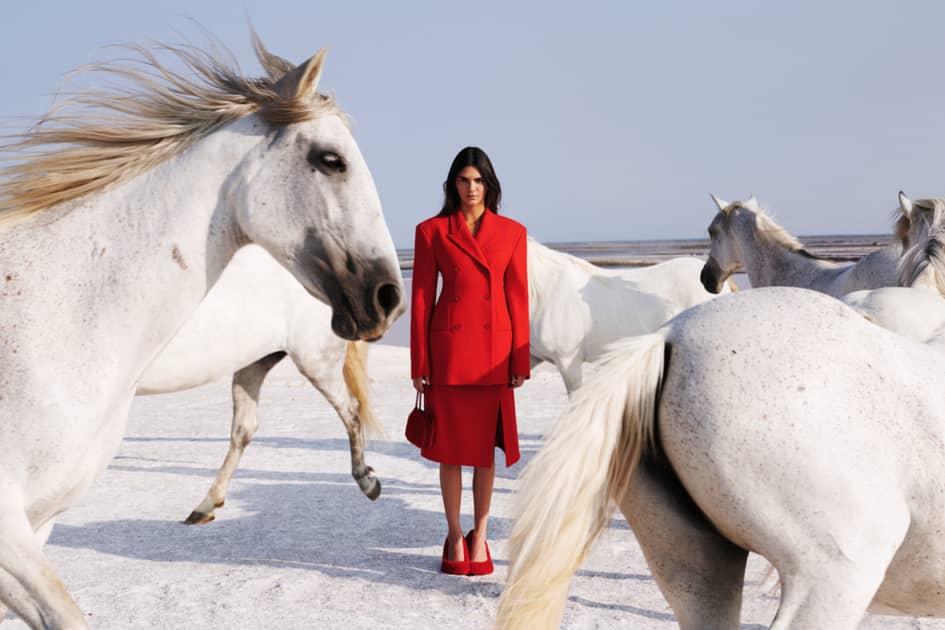
Kendall Jenner in Stella McCartney Herbst 2023 Credits: Harley Weir
A new chief executive officer has been named at British luxury brand Stella McCartney, with Amandine Ohayon understood to be taking up the helm position from December 1.
From her base in London, Ohayon will succeed Gabriele Maggio, who had initially joined the company in 2019 as both president and CEO, and is expected to leave to pursue other opportunities, according to WWD, which first reported the news.
Ohayon most recently served as CEO of Spanish bridal brand Pronovias for over five years, prior to which she held a number of leadership roles at beauty giant L’Oréal.
Here she worked with the likes of YSL, Armani Beauty, Giorgio Armani Beauty and Lancome, primarily as general manager, but also as marketing director or development product manager across the range of brands.
Former Pronovias CEO joins McCartney
On her LinkedIn, Ohayon says she holds over 25 years of luxury expertise and has a “proven international track record of growth and business transformations in beauty and fashion”.
Stella McCartney confirmed Ohayon’s appointment in a statement to WWD, stating that “her people-first leadership and brand-building skills combined with her [ability to execute] have been pivotal in the success of brands”.
The company added that it had tasked its new executive with elevating the house and “accelerating its development based on its longstanding commitment to sustainable fashion”.
In addition to this, designer Stella McCartney noted in her own comment that Ohayon’s “leadership and wealth of experience across businesses and geographies will be strong assets to build a brilliant future for the company. Her passion for great fashion and ethical values makes her a great partner in our quest to champion a sustainable way to business success.”
http://dlvr.it/SzFr90
A new chief executive officer has been named at British luxury brand Stella McCartney, with Amandine Ohayon understood to be taking up the helm position from December 1.
From her base in London, Ohayon will succeed Gabriele Maggio, who had initially joined the company in 2019 as both president and CEO, and is expected to leave to pursue other opportunities, according to WWD, which first reported the news.
Ohayon most recently served as CEO of Spanish bridal brand Pronovias for over five years, prior to which she held a number of leadership roles at beauty giant L’Oréal.
Here she worked with the likes of YSL, Armani Beauty, Giorgio Armani Beauty and Lancome, primarily as general manager, but also as marketing director or development product manager across the range of brands.
Former Pronovias CEO joins McCartney
On her LinkedIn, Ohayon says she holds over 25 years of luxury expertise and has a “proven international track record of growth and business transformations in beauty and fashion”.
Stella McCartney confirmed Ohayon’s appointment in a statement to WWD, stating that “her people-first leadership and brand-building skills combined with her [ability to execute] have been pivotal in the success of brands”.
The company added that it had tasked its new executive with elevating the house and “accelerating its development based on its longstanding commitment to sustainable fashion”.
In addition to this, designer Stella McCartney noted in her own comment that Ohayon’s “leadership and wealth of experience across businesses and geographies will be strong assets to build a brilliant future for the company. Her passion for great fashion and ethical values makes her a great partner in our quest to champion a sustainable way to business success.”
http://dlvr.it/SzFr90
Depop partners with Sook for retail pop-ups
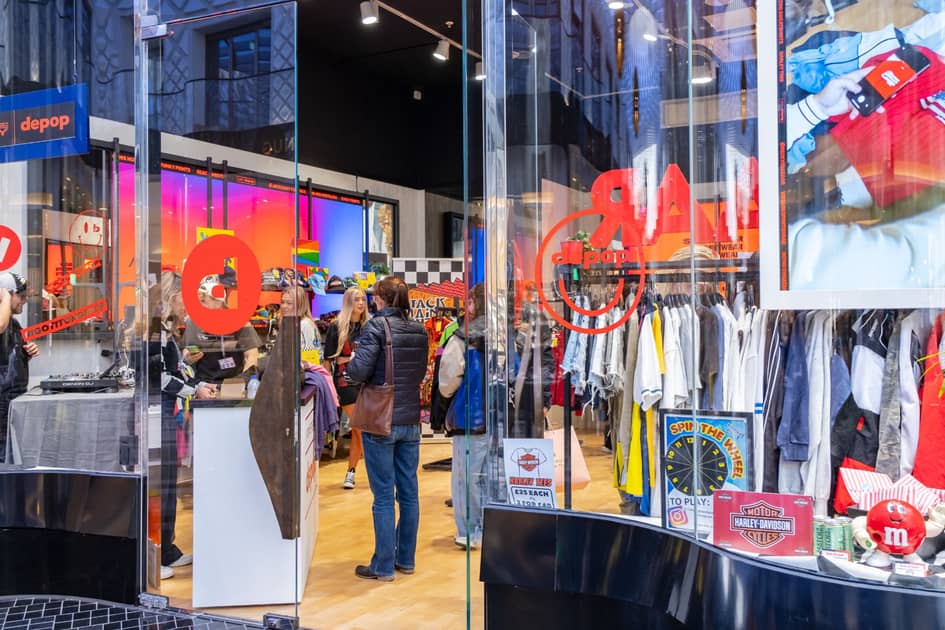
Depop pop-up store. Credits: Depop.
Resale platform Depop is taking to the physical realm via a new partnership with Sook that will see it host a number of pop-ups across the UK.
Over the course of six months, Depop will operate pop-up stores throughout London, Liverpool and Edinburgh, where a selection of unique sellers that operate through its site will be housed.
To begin, four pop-ups will be opened in London during November and December, in spaces where events will take place alongside the exhibition of 11 Depop sellers.
While Kathandrosa will be present at the South Molton Street location, Celiapops, Alicefletchdf and Reloadedldn will be offering curated collections on Oxford Street for two days in December.
Pop-ups will continue into the month, with additional sellers brought to Oxford Street at later dates. More pop-ups are scheduled to open in 2024.
In a release, Steve Dool, director of brand and marketing at Depop, said: “We’re excited to be working with Sook again to give people the opportunity to shop from their favourite Depop sellers in the real world.
“By partnering with Sook, we hope we can reach and inspire more people to look to circular fashion options that are kinder to the planet, rather than buying new.”
http://dlvr.it/SzFVQc
Resale platform Depop is taking to the physical realm via a new partnership with Sook that will see it host a number of pop-ups across the UK.
Over the course of six months, Depop will operate pop-up stores throughout London, Liverpool and Edinburgh, where a selection of unique sellers that operate through its site will be housed.
To begin, four pop-ups will be opened in London during November and December, in spaces where events will take place alongside the exhibition of 11 Depop sellers.
While Kathandrosa will be present at the South Molton Street location, Celiapops, Alicefletchdf and Reloadedldn will be offering curated collections on Oxford Street for two days in December.
Pop-ups will continue into the month, with additional sellers brought to Oxford Street at later dates. More pop-ups are scheduled to open in 2024.
In a release, Steve Dool, director of brand and marketing at Depop, said: “We’re excited to be working with Sook again to give people the opportunity to shop from their favourite Depop sellers in the real world.
“By partnering with Sook, we hope we can reach and inspire more people to look to circular fashion options that are kinder to the planet, rather than buying new.”
http://dlvr.it/SzFVQc
Euromonitor: 6 Consumer trends for 2024
Credits: Pexels
As high streets slowly become Christmas-proof through ornate illuminations and festive store windows, it is clear the end of 2023 is approaching and another new year is upon us. Time to look ahead, then. These are the biggest consumer trends in 2024, according to market research firm Euromonitor International.
AI-enabled chatbots and digital assistants
It probably won't surprise you that artificial intelligence (AI) is in the list of consumer trends. After its launch, ChatGPT reached 100 million users within two months, becoming one of the fastest-growing applications in history. According to Euromonitor, ChatGPT has an accessible nature, allowing consumers with little technical knowledge to quickly get to grips with it.
Not only consumers are experimenting with the technology, companies are also getting to grips with it. For example, they are experimenting with implementing AI in chatbots and voice assistants. This is also referred to as the 'Ask AI trend' and, according to Euromonitor, can provide competitive advantage, provided the tools are used effectively. For instance, it can accelerate go-to-market strategies, content creation and ideas, as well as aggregate user data to drive new product development. In addition, it can build user experiences by, for example, realising virtual assistants that answer shoppers' individual questions.
And it appears that consumers are indeed waiting for this. Over 40 percent of consumers would like to receive personalised recommendations via a voice assistant, the report found. Less than a fifth feel the same about using bots to answer complex customer service questions. Sustainable trainer brand Wear, for example, is already experimenting with a digital assistant. The ‘trainer cleaning chatbot’ provides personalised advice based on photos for maintaining and cleaning trainers.
Wear launches a trainer cleaning chatbot. Credits:
Wear
In search of happiness
The events of recent years have not left consumers cold. The corona crisis was quickly exchanged for economic uncertainties, political unrest, climate disasters and wars.The consumer has had enough and went in search of happiness. And happiness is in the little things, isn't it?
According to Euromonitor, a small (unexpected) surprise or small acts can already satisfy this consumer demand. In addition, consumers look for products that generate satisfaction. The dopamine dressing fashion trend is an example of this.
What should you, as a company, do with this trend? Bring your communication with consumers under the microscope. For example, put a light-hearted spin on order confirmation e-mails. In addition, emotional marketing will play a big role in this trend. "Brands should focus on linking their products to this cultural desire for optimism," wrote Euromonitor. This will make customers associate a positive feeling with your brand. Interactive brand experiences also play a role in the desire for escapism. Should you organise events, make sure you combine technology, brand storytelling and entertainment. "This will both captivate and entertain your audience."
Done with greenwashing
In a world where the climate crisis is gaining a bigger stage, consumers are trying to contribute. Yet, that's not so easy. They find themselves in a labyrinth of sustainable options, which often come with a catch. Is it all as sustainable as it seems? Something that is certain is that consumers are done with greenwashing.
Consumers experiencing green fatigue are no longer accepting of empty promises or fake stories from brands and companies. Environmental concerns remain at the top of the agenda for now, and sustainable choices will continue to be made. But, there is also a group that feels discouraged and will therefore try less.
You can probably guess, but full transparency is essential in this consumer trend, according to the report. Share concrete evidence of responsible business practices and validate progress, is the message here. "At the same time, demonstrate sustainable impact with specific data. For example, if your product is made from recyclable materials, put on the packaging how much waste was saved during production." This way, consumers know right away how their purchase decision or behaviour makes a difference. Besides transparency, affordability is also a sticking point. Consumers often find sustainable products too expensive. Euromonitor therefore thinks that the prices of sustainable products should be made more attractive.
Credits: AI generated images created by FashionUnited.
Political expressions? Rather not, stay authentic to the brand ethos
Consumers value brands that match their values. After all, purchases reflect the causes they care about or how they want to look. Social responsibility, political commitment or sustainability initiatives can therefore have a positive impact on consumers and motivate spending. But, with political unrest in a lot of countries, this is not always the case.
Brands that choose to speak out about political concerns sometimes cut themselves in half. For instance, consumers sometimes avoid brands that promote a partisan agenda. Moreover, companies that push marketing campaigns around controversial issues are sometimes scolded or avoided. This can damage brand reputation.
Yet, companies that get it right can also strengthen their customer loyalty. So how do you tackle this? Support issues that are important to your customer and that fit the brand identity. Delve into the minds of your target audience by approaching focus groups and seeking their views. Besides focus groups, social listening tools also provide insight into your target group's views. While expressing political views in a nuanced way, it is important to maintain brand authenticity.
This consumer trend brings forth a number of difficulties. Euromonitor therefore argued that you cannot please everyone. "Brands that want to make their voices heard must accept both the potential risks and rewards associated with tackling a controversial issue."
Value hackers
Another topic we cannot avoid is inflation. Rising costs are causing consumers to rearrange their spending. They choose cheaper options. The saving behaviour is something that consumers continue to exhibit, even as inflation eases, Euromonitor stated. Indeed, they seem to be looking for ways to save further and are emerging as 'value hackers'.
As a company or brand, you can capitalise on this by offering bundle and save offers, for example. You enable shoppers to buy multiple products at a discount. In addition, subscription and savings plans work in the same way, according to Euromonitor. In addition to capitalising on the price of a product, you can also cater to consumers with loyalty programmes.
It is also important that consumers understand your value proposition. You guessed it: communication is key. "Promote the right information that will influence their decisions. If buyers do not understand your value position, they will switch to a competitor or look for alternatives," said Euromonitor. Sharing tips and tricks to save money is also appreciated by consumers.
Credits: Pexels
Mental and spiritual health
Consumers want to look good and feel good. This has been true for years, but the trend in how they do so is shifting. Where consumers previously opted for a quick fix, they are now choosing to take their time.
Before, consumers preferred easy, effective solutions that adapt their lifestyles and take little time and effort as well as no major commitments. Now they are saying goodbye to the quick fix and taking a realistic approach. Consumers no longer expect radical changes, but they do want visible improvement, the report said.
In shopping behaviour, this translates into those opting for user-friendly or more workable solutions. Here, proven effectiveness is a key component. You need to make sure you can prove that your product works by, for example, before-and-after photos. In addition, data is also essential. For instance, real-monitoring and smart tools help keep track of progress.
http://dlvr.it/SzFV9C
As high streets slowly become Christmas-proof through ornate illuminations and festive store windows, it is clear the end of 2023 is approaching and another new year is upon us. Time to look ahead, then. These are the biggest consumer trends in 2024, according to market research firm Euromonitor International.
AI-enabled chatbots and digital assistants
It probably won't surprise you that artificial intelligence (AI) is in the list of consumer trends. After its launch, ChatGPT reached 100 million users within two months, becoming one of the fastest-growing applications in history. According to Euromonitor, ChatGPT has an accessible nature, allowing consumers with little technical knowledge to quickly get to grips with it.
Not only consumers are experimenting with the technology, companies are also getting to grips with it. For example, they are experimenting with implementing AI in chatbots and voice assistants. This is also referred to as the 'Ask AI trend' and, according to Euromonitor, can provide competitive advantage, provided the tools are used effectively. For instance, it can accelerate go-to-market strategies, content creation and ideas, as well as aggregate user data to drive new product development. In addition, it can build user experiences by, for example, realising virtual assistants that answer shoppers' individual questions.
And it appears that consumers are indeed waiting for this. Over 40 percent of consumers would like to receive personalised recommendations via a voice assistant, the report found. Less than a fifth feel the same about using bots to answer complex customer service questions. Sustainable trainer brand Wear, for example, is already experimenting with a digital assistant. The ‘trainer cleaning chatbot’ provides personalised advice based on photos for maintaining and cleaning trainers.
Wear launches a trainer cleaning chatbot. Credits:
Wear
In search of happiness
The events of recent years have not left consumers cold. The corona crisis was quickly exchanged for economic uncertainties, political unrest, climate disasters and wars.The consumer has had enough and went in search of happiness. And happiness is in the little things, isn't it?
According to Euromonitor, a small (unexpected) surprise or small acts can already satisfy this consumer demand. In addition, consumers look for products that generate satisfaction. The dopamine dressing fashion trend is an example of this.
What should you, as a company, do with this trend? Bring your communication with consumers under the microscope. For example, put a light-hearted spin on order confirmation e-mails. In addition, emotional marketing will play a big role in this trend. "Brands should focus on linking their products to this cultural desire for optimism," wrote Euromonitor. This will make customers associate a positive feeling with your brand. Interactive brand experiences also play a role in the desire for escapism. Should you organise events, make sure you combine technology, brand storytelling and entertainment. "This will both captivate and entertain your audience."
Done with greenwashing
In a world where the climate crisis is gaining a bigger stage, consumers are trying to contribute. Yet, that's not so easy. They find themselves in a labyrinth of sustainable options, which often come with a catch. Is it all as sustainable as it seems? Something that is certain is that consumers are done with greenwashing.
Consumers experiencing green fatigue are no longer accepting of empty promises or fake stories from brands and companies. Environmental concerns remain at the top of the agenda for now, and sustainable choices will continue to be made. But, there is also a group that feels discouraged and will therefore try less.
You can probably guess, but full transparency is essential in this consumer trend, according to the report. Share concrete evidence of responsible business practices and validate progress, is the message here. "At the same time, demonstrate sustainable impact with specific data. For example, if your product is made from recyclable materials, put on the packaging how much waste was saved during production." This way, consumers know right away how their purchase decision or behaviour makes a difference. Besides transparency, affordability is also a sticking point. Consumers often find sustainable products too expensive. Euromonitor therefore thinks that the prices of sustainable products should be made more attractive.
Credits: AI generated images created by FashionUnited.
Political expressions? Rather not, stay authentic to the brand ethos
Consumers value brands that match their values. After all, purchases reflect the causes they care about or how they want to look. Social responsibility, political commitment or sustainability initiatives can therefore have a positive impact on consumers and motivate spending. But, with political unrest in a lot of countries, this is not always the case.
Brands that choose to speak out about political concerns sometimes cut themselves in half. For instance, consumers sometimes avoid brands that promote a partisan agenda. Moreover, companies that push marketing campaigns around controversial issues are sometimes scolded or avoided. This can damage brand reputation.
Yet, companies that get it right can also strengthen their customer loyalty. So how do you tackle this? Support issues that are important to your customer and that fit the brand identity. Delve into the minds of your target audience by approaching focus groups and seeking their views. Besides focus groups, social listening tools also provide insight into your target group's views. While expressing political views in a nuanced way, it is important to maintain brand authenticity.
This consumer trend brings forth a number of difficulties. Euromonitor therefore argued that you cannot please everyone. "Brands that want to make their voices heard must accept both the potential risks and rewards associated with tackling a controversial issue."
Value hackers
Another topic we cannot avoid is inflation. Rising costs are causing consumers to rearrange their spending. They choose cheaper options. The saving behaviour is something that consumers continue to exhibit, even as inflation eases, Euromonitor stated. Indeed, they seem to be looking for ways to save further and are emerging as 'value hackers'.
As a company or brand, you can capitalise on this by offering bundle and save offers, for example. You enable shoppers to buy multiple products at a discount. In addition, subscription and savings plans work in the same way, according to Euromonitor. In addition to capitalising on the price of a product, you can also cater to consumers with loyalty programmes.
It is also important that consumers understand your value proposition. You guessed it: communication is key. "Promote the right information that will influence their decisions. If buyers do not understand your value position, they will switch to a competitor or look for alternatives," said Euromonitor. Sharing tips and tricks to save money is also appreciated by consumers.
Credits: Pexels
Mental and spiritual health
Consumers want to look good and feel good. This has been true for years, but the trend in how they do so is shifting. Where consumers previously opted for a quick fix, they are now choosing to take their time.
Before, consumers preferred easy, effective solutions that adapt their lifestyles and take little time and effort as well as no major commitments. Now they are saying goodbye to the quick fix and taking a realistic approach. Consumers no longer expect radical changes, but they do want visible improvement, the report said.
In shopping behaviour, this translates into those opting for user-friendly or more workable solutions. Here, proven effectiveness is a key component. You need to make sure you can prove that your product works by, for example, before-and-after photos. In addition, data is also essential. For instance, real-monitoring and smart tools help keep track of progress.
http://dlvr.it/SzFV9C
Thursday, November 23, 2023
Kunsthalle München to explore Viktor&Rolf’s fashion statements
Ellen von Unwerth - Ana and Tanya, Town & Country, 2023, Viktor&Rolf Late Stage Capitalism Waltz Haute Couture, S/S 2023 Credits: Courtesy of Kunsthalle München by Ellen von Unwerth
Kunsthalle München museum in Munich, Germany, is to host a fashion exhibition dedicated to Dutch fashion duo Viktor Horsting and Rolf Snoeren featuring more than 100 of their most daring creations.
‘Viktor&Rolf: Fashion Statements’ opens in February 2024 and will mark the first major retrospective on Viktor&Rolf in Germany. The exhibition, developed by the Kunsthalle München in collaboration with the Canadian curator Thierry Maxime Loriot, will delve into duo’s “passions, obsessions and singular vision”.
On display will be 100 of Viktor&Rolf’s designs, many of which will be exhibited for the first time, from the designers’ own archive and private collections. The avant-garde looks will be showcased alongside a selection of their dolls, inspired by antique porcelain dolls, dressed in the designers’ most iconic creations, which are handmade season after season.
The exhibition will also feature numerous videos, sketches, and works by distinguished visual artists, including Andreas Gursky, Inez&Vinoodh, and Ellen von Unwerth, as well as specially commissioned animated projections by internationally acclaimed visual effect studio Rodeo FX, famous for their work on series like Stranger Things, Game of Thrones, and Lord of the Rings.
Viktor&Rolf retrospective to open in Germany in February 2024
Commenting on the upcoming exhibition of their work, Viktor&Rolf said in a statement: “We are thrilled to show a selection of more than 30 years of our work at the Kunsthalle München. We have always felt strongly about the way museum shows complement our seasonal catwalk presentations.
"Exhibitions are more democratic than the runway: they allow more visitors, and they last longer. They can show that certain themes recur over the years and put a spotlight onto the sublime craftmanship that goes into the creation of our pieces.”
Viktor&Rolf,Spring Summer 2023 Haute Couture Credits: Launchmetrics Spotlight
The exhibit will be divided into nine chapters, each referring to specific themes “cherished” by the designers – Upside/Down, Fashion Artists, Russian Dolls, Fashion Statements, The Dolls, Zen Garden, Performing Fashion, Viktor&Rolf on Stage, and Upcycling Couture.
Highlights will include how the duo worked with vintage fabrics used by Cristobal Balenciaga and Yves Saint Laurent, and later on, how they referenced not only their own former collections but also their signature motifs, such as ruffles and embroideries and voluminous silhouettes, to create highly unorthodox haute couture as a ‘new beginning’ in patchworks, braids or woven techniques.
Pieces from their ‘Fashion Statements’ collection from spring/summer 2019, which featured short slogans typically used in social media on tulle dresses will be showcased alongside the duo’s spring 2023 ‘Late Stage Capitalism’ collection, and its autumn/winter 1999 ‘Russian Doll’ collection.
Viktor & Rolf, haute couture, SS23. Credits: Launchmetrics Spotlight
Roger Diederen, director of the Kunsthalle, said: “With ‘Viktor&Rolf. Fashion Statements,’ the Kunsthalle München is organising the next major haute couture exhibition. I am very excited to be able to present this designer duo from Amsterdam in Munich and thus realise their first retrospective in the German-speaking world.
“Viktor&Rolf's innovative creations, which have been inspiring not only the fashion world but also the art scene for 30 years now, will be shown in an unexpected scenography at the Kunsthalle.”
Accompanying the exhibition will be an illustrated publication with introductory essays and an interview with Viktor&Rolf which will provide an in-depth look at the fashion artists’ contradictory identity that pushes the boundaries between art and fashion, often contrasting romance and power, exuberance and control, classicism and rebellion.
‘Viktor&Rolf: Fashion Statements’ will run from February 23 to October 6, 2024, at Kunsthalle München museum in Munich, Germany.
http://dlvr.it/SzCFLp
Kunsthalle München museum in Munich, Germany, is to host a fashion exhibition dedicated to Dutch fashion duo Viktor Horsting and Rolf Snoeren featuring more than 100 of their most daring creations.
‘Viktor&Rolf: Fashion Statements’ opens in February 2024 and will mark the first major retrospective on Viktor&Rolf in Germany. The exhibition, developed by the Kunsthalle München in collaboration with the Canadian curator Thierry Maxime Loriot, will delve into duo’s “passions, obsessions and singular vision”.
On display will be 100 of Viktor&Rolf’s designs, many of which will be exhibited for the first time, from the designers’ own archive and private collections. The avant-garde looks will be showcased alongside a selection of their dolls, inspired by antique porcelain dolls, dressed in the designers’ most iconic creations, which are handmade season after season.
The exhibition will also feature numerous videos, sketches, and works by distinguished visual artists, including Andreas Gursky, Inez&Vinoodh, and Ellen von Unwerth, as well as specially commissioned animated projections by internationally acclaimed visual effect studio Rodeo FX, famous for their work on series like Stranger Things, Game of Thrones, and Lord of the Rings.
Viktor&Rolf retrospective to open in Germany in February 2024
Commenting on the upcoming exhibition of their work, Viktor&Rolf said in a statement: “We are thrilled to show a selection of more than 30 years of our work at the Kunsthalle München. We have always felt strongly about the way museum shows complement our seasonal catwalk presentations.
"Exhibitions are more democratic than the runway: they allow more visitors, and they last longer. They can show that certain themes recur over the years and put a spotlight onto the sublime craftmanship that goes into the creation of our pieces.”
Viktor&Rolf,Spring Summer 2023 Haute Couture Credits: Launchmetrics Spotlight
The exhibit will be divided into nine chapters, each referring to specific themes “cherished” by the designers – Upside/Down, Fashion Artists, Russian Dolls, Fashion Statements, The Dolls, Zen Garden, Performing Fashion, Viktor&Rolf on Stage, and Upcycling Couture.
Highlights will include how the duo worked with vintage fabrics used by Cristobal Balenciaga and Yves Saint Laurent, and later on, how they referenced not only their own former collections but also their signature motifs, such as ruffles and embroideries and voluminous silhouettes, to create highly unorthodox haute couture as a ‘new beginning’ in patchworks, braids or woven techniques.
Pieces from their ‘Fashion Statements’ collection from spring/summer 2019, which featured short slogans typically used in social media on tulle dresses will be showcased alongside the duo’s spring 2023 ‘Late Stage Capitalism’ collection, and its autumn/winter 1999 ‘Russian Doll’ collection.
Viktor & Rolf, haute couture, SS23. Credits: Launchmetrics Spotlight
Roger Diederen, director of the Kunsthalle, said: “With ‘Viktor&Rolf. Fashion Statements,’ the Kunsthalle München is organising the next major haute couture exhibition. I am very excited to be able to present this designer duo from Amsterdam in Munich and thus realise their first retrospective in the German-speaking world.
“Viktor&Rolf's innovative creations, which have been inspiring not only the fashion world but also the art scene for 30 years now, will be shown in an unexpected scenography at the Kunsthalle.”
Accompanying the exhibition will be an illustrated publication with introductory essays and an interview with Viktor&Rolf which will provide an in-depth look at the fashion artists’ contradictory identity that pushes the boundaries between art and fashion, often contrasting romance and power, exuberance and control, classicism and rebellion.
‘Viktor&Rolf: Fashion Statements’ will run from February 23 to October 6, 2024, at Kunsthalle München museum in Munich, Germany.
http://dlvr.it/SzCFLp
New leather goods school to open in Haute-Loire, France
Couture work, illustrative image. Credits: Ярослав Гринько, Unsplash.
Brives-Charensac, a town in the south-central Haute-Loire region in France, is to be the site of a school of excellence in leather goods. According to the local media outlet L'Éveil de la Haute-Loire, in October elected representatives approved a feasibility study for the future school to be located in the Le Puy-en-Velay area.
According to Michel Joubert, chairman of the greater Le Puy-en-Velay urban community and mayor of the Chaspuzac municipality, the project was long overdue. In an interview filmed and broadcast by the local news website La Commère 43, the mayor said that the French leather industry "lacks skilled, trained workers, even though it's a booming sector that can provide recruitment and therefore jobs for the future. It interests us because it's an opportunity for local employment."
The organisations involved in the project include the French leather goods federation (Fédération française de la maroquinerie) and the leather technical centre (Centre technique du cuir). The project is jointly funded by the Haute-Loire region, the Le Puy urban area and a group of companies.
The School of Excellence in Leather Goods will be built in a historic building, namely the cloister of the Chartreuse. The new French educational facility and accommodation aims to train between 80 and 120 people a year.
This article was originally published on FashionUnited.FR. Translation and edit from French into English: Veerle Versteeg.
http://dlvr.it/SzCF2t
Brives-Charensac, a town in the south-central Haute-Loire region in France, is to be the site of a school of excellence in leather goods. According to the local media outlet L'Éveil de la Haute-Loire, in October elected representatives approved a feasibility study for the future school to be located in the Le Puy-en-Velay area.
According to Michel Joubert, chairman of the greater Le Puy-en-Velay urban community and mayor of the Chaspuzac municipality, the project was long overdue. In an interview filmed and broadcast by the local news website La Commère 43, the mayor said that the French leather industry "lacks skilled, trained workers, even though it's a booming sector that can provide recruitment and therefore jobs for the future. It interests us because it's an opportunity for local employment."
The organisations involved in the project include the French leather goods federation (Fédération française de la maroquinerie) and the leather technical centre (Centre technique du cuir). The project is jointly funded by the Haute-Loire region, the Le Puy urban area and a group of companies.
The School of Excellence in Leather Goods will be built in a historic building, namely the cloister of the Chartreuse. The new French educational facility and accommodation aims to train between 80 and 120 people a year.
This article was originally published on FashionUnited.FR. Translation and edit from French into English: Veerle Versteeg.
http://dlvr.it/SzCF2t
Phoebe Philo announces collection's second drop
An embroidered coat, made to order Credits: Phoebe Philo website
British designer Phoebe Philo, who last month debuted the initial offerings from her new namesake fashion house, has confirmed the second drop of her inaugural A1 edit. New styles will be available on the brand’s website on 28 November, as confirmed by a newsletter, although specifics of the second release remain undisclosed. A later third delivery is also expected.
Philo has chosen to diverge from the conventional fashion show and delivery calendar, opting for a personalised schedule for the release of her collections, said WWD. This approach aligns with her vision of creating designs that transcend seasonal constraints and contribute to an ongoing body of work.
Philo’s launch was a near immediate sell-out and was widely regarded as one of the most eagerly awaited womenswear releases of 2023. The collection spans accessory categories such as handbags, sunglasses and jewellery, in addition to ready-to-wear and shoes. Special items, such as a hand-combed viscose coat, are made to order with prices provided on application. The collection’s sell-out rates reflect the brand’s popularity and the cachet Ms Philo holds not just as an industry leader but also to customers, who value her unique aesthetic.
Despite not having a store or wholesale network, the lack of middlemen has not impacted the collection’s high prices, which sit in the same scope as other luxury brands. Handbags, for example, retail between 3,500 and 8,500 dollars. This may mean the company may wholesale to select retailers in the future, when investors need to see growth.
The buzz surrounding the launch has been steadily growing since Philo announced her return to the fashion scene in July 2021, unveiling plans for a new independent house with LVMH as a minority investor. Recognized as one of the most esteemed and commercially successful designers of her generation, the brand has thus far proven the direct to consumer business model can still bring sell-out success.
Phoebe Philo announces brand's second drop Credits: Phoebe Philo newsletter
http://dlvr.it/SzCDnp
British designer Phoebe Philo, who last month debuted the initial offerings from her new namesake fashion house, has confirmed the second drop of her inaugural A1 edit. New styles will be available on the brand’s website on 28 November, as confirmed by a newsletter, although specifics of the second release remain undisclosed. A later third delivery is also expected.
Philo has chosen to diverge from the conventional fashion show and delivery calendar, opting for a personalised schedule for the release of her collections, said WWD. This approach aligns with her vision of creating designs that transcend seasonal constraints and contribute to an ongoing body of work.
Philo’s launch was a near immediate sell-out and was widely regarded as one of the most eagerly awaited womenswear releases of 2023. The collection spans accessory categories such as handbags, sunglasses and jewellery, in addition to ready-to-wear and shoes. Special items, such as a hand-combed viscose coat, are made to order with prices provided on application. The collection’s sell-out rates reflect the brand’s popularity and the cachet Ms Philo holds not just as an industry leader but also to customers, who value her unique aesthetic.
Despite not having a store or wholesale network, the lack of middlemen has not impacted the collection’s high prices, which sit in the same scope as other luxury brands. Handbags, for example, retail between 3,500 and 8,500 dollars. This may mean the company may wholesale to select retailers in the future, when investors need to see growth.
The buzz surrounding the launch has been steadily growing since Philo announced her return to the fashion scene in July 2021, unveiling plans for a new independent house with LVMH as a minority investor. Recognized as one of the most esteemed and commercially successful designers of her generation, the brand has thus far proven the direct to consumer business model can still bring sell-out success.
Phoebe Philo announces brand's second drop Credits: Phoebe Philo newsletter
http://dlvr.it/SzCDnp
Lush continues 'Big Tech Rebellion' with Black Friday initiative
Lush ‘The Cloud’ bath bomb Credits: Lush
Beauty
British beauty brand Lush is using Black Friday to raise money for the decentralised movement ‘People vs Big Tech’ in a continuation of its ‘Big Tech Rebellion’ campaign.
In a statement, Lush said that it was raising money with a new limited-edition bath bomb to support its work to "rein in the handful of Big Tech companies that have monopolised the Internet with intrusive surveillance, predatory addictive-algorithms, harmful content and echo chambers".
‘The Cloud’ bath bomb will launch on Black Friday, November 24, across its e-commerce sites in the UK, US, Canada, France, Germany, Hungary, Spain, Italy, Japan, Australia and New Zealand. Priced at 6.50 pounds, 100 percent of the sales price (minus the VAT) will be donated to People vs Big Tech.
Annabelle Baker, global brand director at Lush, said in a statement: “Black Friday is generally a time when the Big Tech companies rake in huge profits, but at what cost?
“It’s important that we campaign at this critical time of year to fund movements like People vs Big Tech who are providing a pathway to a future without surveillance advertising or predatory algorithms and putting the control back into the hands of the people.”
http://dlvr.it/SzCDVK
Beauty
British beauty brand Lush is using Black Friday to raise money for the decentralised movement ‘People vs Big Tech’ in a continuation of its ‘Big Tech Rebellion’ campaign.
In a statement, Lush said that it was raising money with a new limited-edition bath bomb to support its work to "rein in the handful of Big Tech companies that have monopolised the Internet with intrusive surveillance, predatory addictive-algorithms, harmful content and echo chambers".
‘The Cloud’ bath bomb will launch on Black Friday, November 24, across its e-commerce sites in the UK, US, Canada, France, Germany, Hungary, Spain, Italy, Japan, Australia and New Zealand. Priced at 6.50 pounds, 100 percent of the sales price (minus the VAT) will be donated to People vs Big Tech.
Annabelle Baker, global brand director at Lush, said in a statement: “Black Friday is generally a time when the Big Tech companies rake in huge profits, but at what cost?
“It’s important that we campaign at this critical time of year to fund movements like People vs Big Tech who are providing a pathway to a future without surveillance advertising or predatory algorithms and putting the control back into the hands of the people.”
http://dlvr.it/SzCDVK
Ba&sh teams up with Nativa to develop regenerative farming
Ba&sh, regenerative farming Credits: Ba&sh
French contemporary brand Ba&sh is partnering with Nativa on a new project to help develop and finance regenerative farming practices for farms in Uruguay.
As part of the agreement, Ba&sh will incorporate regenerative wool from these farms into its future knitwear collections and as part of its increased efforts to protect biodiversity and reduce its carbon footprint, it has also set a goal of using 30 percent of regenerative or transitioning wool into its collections by the end of 2025.
The move will require a “new creative process that starts with the yarn,” and a reimagining of creative and logistical processes, such as working with its supply chain to align with the farming calendar. For instance, wool obtained at the end of summer 2023 will be used in the 2024 winter collections.
Pierre-Arnaud Grenade, chief executive of Ba&sh, said in a statement: “By partnering with the Nativa Regenerative Agriculture Programme, we hope to foster a more demanding and innovative relationship between the fashion industry and its agricultural partners.
“We are aware of the need to make further progress in certain areas to make fashion more environmentally friendly and respectful of life on our planet. Our approach to today’s burning issues involves taking a holistic view, and regenerative agriculture meets all these criteria.”
Ba&sh added that six out of nine planetary limits “have been breached, particularly relating to the change of use of soil,” and working with Nativa will support soil regeneration, protection of biodiversity, elimination of synthetic inputs, improving social equity and the economic situation of farmers as well as animal welfare.
The Nativa Regenerative Agriculture Programme requirements are built on a triple-impact system, based on scientific research, and includes introducing perennial grasses into natural pastureland to produce higher quality food for sheep and provide the local ecosystem with living roots, as well as reintroducing native tree species to provide shade for sheep and shelter for other wildlife, and to promote biodiversity. It also requires restoration of the local ecosystem and biodiversity by using streams, natural riverbanks and drinking troughs.
http://dlvr.it/SzCD8B
French contemporary brand Ba&sh is partnering with Nativa on a new project to help develop and finance regenerative farming practices for farms in Uruguay.
As part of the agreement, Ba&sh will incorporate regenerative wool from these farms into its future knitwear collections and as part of its increased efforts to protect biodiversity and reduce its carbon footprint, it has also set a goal of using 30 percent of regenerative or transitioning wool into its collections by the end of 2025.
The move will require a “new creative process that starts with the yarn,” and a reimagining of creative and logistical processes, such as working with its supply chain to align with the farming calendar. For instance, wool obtained at the end of summer 2023 will be used in the 2024 winter collections.
Pierre-Arnaud Grenade, chief executive of Ba&sh, said in a statement: “By partnering with the Nativa Regenerative Agriculture Programme, we hope to foster a more demanding and innovative relationship between the fashion industry and its agricultural partners.
“We are aware of the need to make further progress in certain areas to make fashion more environmentally friendly and respectful of life on our planet. Our approach to today’s burning issues involves taking a holistic view, and regenerative agriculture meets all these criteria.”
Ba&sh added that six out of nine planetary limits “have been breached, particularly relating to the change of use of soil,” and working with Nativa will support soil regeneration, protection of biodiversity, elimination of synthetic inputs, improving social equity and the economic situation of farmers as well as animal welfare.
The Nativa Regenerative Agriculture Programme requirements are built on a triple-impact system, based on scientific research, and includes introducing perennial grasses into natural pastureland to produce higher quality food for sheep and provide the local ecosystem with living roots, as well as reintroducing native tree species to provide shade for sheep and shelter for other wildlife, and to promote biodiversity. It also requires restoration of the local ecosystem and biodiversity by using streams, natural riverbanks and drinking troughs.
http://dlvr.it/SzCD8B
Subscribe to:
Posts (Atom)