Pepa Salazar, winner of the Vogue Fashion Fund 2023 award, during the award ceremony.Credits: Daniel Merino, courtesy of Vogue.
The biggest fashion prize awarded in Spain has selected the winner of its 2023 edition Pepa Salazar was one of the three finalists announced for this year's edition of the award, and has now emerged as the winner of the prize, whose cash prize is worth 100,000 euros.
The designer has already said that she intends to use the money to promote the internationalisation of her fashion house, from which she has been dressing the likes of Rosalía, Madonna and Kim Kardashian and hopes to dress more international celebrities.
Pepa Salazar was born in Valencia and studied fashion design at the Istituto Europeo di Design (IED) in Madrid, after which she joined the creative team at Loewe. A position from which she ended up gaining the necessary confidence and knowledge to decide to embark on her own solo adventure in 2013, founding her own fashion house and presenting her first collection on the Samsung EGO catwalk competition for emerging designers at Mercedes-Benz Fashion Week Madrid, which is known as the Allianz Ego catwalk competition today.
Pepa Salazar, winner of the Vogue Fashion Fund 2023 award, during the award ceremony. Credits: Daniel Merino, courtesy of Vogue.
Pepa Salazar is crowned winner of Vogue Fashion Fund Spain 2023
Furthermore, during the September 2013 edition of Mercedes-Benz Fashion Week Madrid (MBFWMadrid) Salazar’s designs were recognised with the Mercedes-Benz Fashion Talent award for the best emerging collection. From there she went on to achieve different recognitions and mentions, such as winning the Samsung Innovation Project award in 2014 for her second collection ‘Hyperdry’, which at the time was awarded by the Madrid event.
In 2017, she was one of the finalists for the Vogue Who's On Next award, the predecessor of the Vogue Fashion Fund.
Inés Lorenzo, content director at Vogue Spain, with the creative directors of the three emerging brands finalists for the 2023 edition, Habey Club, Pepa Salazar and Sonia Carrasco.Credits: Daniel Merino, courtesy of Vogue.
Designs by Pepa Salazar, Sonia Carrasco and Habey Club. Créditos: Daniel Merino, por cortesía de Vogue.
Group photo of the members of the jury of this edition, formed by Lulú Figueroa, Sara Hernando, Helena Contreras, Pepa Bueno, Eloy Martinez de la Pera, Inés Lorenzo, Sita Abellán, Minerva Portillo and Paula Cánovas del Vas.
The jury for the 2023 edition consisted of Vogue Spain director Sara Hernando, stylist Helena Contreras, Acme CEO Pepa Bueno, and fashion expert Eloy Martinez de la Pera, who has been responsible for organising the main fashion exhibitions in Spain of the past few years, and others. Designer Paula Cánovas del Vas was also a member of the judging panel at this edition, having won the previous edition of the award.
Pepa Salazar and Inés Lorenzo with winners of previous editions of the Vogue Fashion Fund, with Jaime Álvarez (Mans), Paula Cánovas del Vas, Juan Vidal, Víctor Alonso, María Lemus, Leandro Cano ,Carlota Barrera and Moisés Nieto.
As a deserving winner in the eyes of the jury, the Valencian designer will automatically become a member of Spain's association for fashion creators (Asociación Creadores de Moda de España), without the need to go through the required assembly vote that is necessary to approve the incorporation of any new member of the association.
This article was originally published on FashionUnited.ES. Translation and edit from Spanish into English by Veerle Versteeg.
http://dlvr.it/SzwSLs
Women shirts & amp; Pajamas and versatile Fashion of Amazon and Alibaba., fashion, Facebook,youtube, instagram, tweeter and google
Saturday, December 9, 2023
European Parliament reviews eco-design framework, reaches agreement on destruction of unsold clothing ban
Denim recycling by Mud Jeans. Credits: Mud Jeans
The European Parliament has reached a preliminary agreement to revise the EU eco-design framework for sustainable products. While rules had already been outlined for this, the parliament has now further shaped the rules as well as added new ones.
For instance, MEPs agreed that eco-design requirements should also cover practices related to early obsolescence, Parliament summarised in a press release. The rules should be adopted no later than nine months after the new legislation comes into force. The European Parliament asked the Commission to prioritise products such as textiles (especially clothing and footwear), furniture, paints and chemicals.
The ban on destroying unsold clothes, accessories and shoes is also a new addition. The ban will take effect two years after the law comes into force. In the future, the Commission will add additional categories to the list of unsold products subject to a ban on destruction.
EU reaches agreement for mandatory product passports and ban on destruction of unsold textiles
"It is time to put an end to the 'take, make and throw away' model that is so damaging to our planet, our health and our economy," said Alessandra Moretti, the Italian MP pushing for these regulations in parliament. "Sustainable products will become the norm, allowing consumers to save energy, make repairs and make smart environmental choices while shopping. A ban on destroying unsold textiles and footwear will therefore contribute to a shift in the way fast fashion manufacturers produce their goods."
The goal of the 'eco-design' framework also got an update. The ambition is now to improve various parts of products during their life cycle to make them more durable and reliable, and easier to repair and recycle. This should use fewer resources, energy and water. There will also be a requirement for product passports, giving consumers accurate and up-to-date information about the product that can help them make informed decisions during a purchase.
Plans to revise the new eco-design rules became clear back in July, when at the time a mandatory product passport and a ban on the destruction of unsold textiles was already outlined.
http://dlvr.it/SzwS7m
Friday, December 8, 2023
Balmain unveils AI-powered project for Unicorn sneakers
Balmain and Space Runners team up with Ant Kai on customised Unicorn sneakers. Credits: Space Runners.
Luxury brand Balmain has revealed a partnership with Space Runners and American artist Ant Kai consisting of a project that leveraged artificial intelligence (AI) in order to elevate the personalisation of the house’s Unicorn sneakers.
Putting to use Generative AI, Balmain and Space Runners aimed to offer “unparalleled freedom” for customisation, and ultimately saw Ant Kai tasked with putting his own spin onto the Unicorn silhouette.
These one-of-a-kind sneakers will be available exclusively at the brand’s new Atlanta flagship and on its e-commerce site, with the partnership looking to build on what the companies said was a “singular narrative that resonates with a broader audience”, particularly that of a new young customer.
Balmain x Space Runners, Unicorn sneakers by Ant Kai. Credits: Space Runners.
Digital collectibles will also be minted on blockchain platform Polygon, allowing users to mint their own creations and design, while “embracing the platform’s environmentally friendly principles and fostering a new era of conscientious digital artistry”.
This latest partnership bolsters Balmain and Space Runners' already established relationship, which first came to light when the duo worked together on a collection of digital-wearables and physical apparel for a show at Paris Fashion Week.
With this new use of AI in the mix, Space Runners said that this collaboration “serves as a blueprint for future high-end brands aiming for authenticity and originality”.
http://dlvr.it/SztRLH
Delta Apparel posts Q4 loss, net sales decline
Credits: Salt Life via Facebook
Fourth quarter Delta Apparel net sales declined to 91.4 million dollars with Salt Life Group segment net sales decreasing to 12.5 million dollars and the Delta Group segment net sales to 78.9 million dollars.
Net sales for the full year decreased to 415.4 million dollars with Salt Life Group segment net sales declining to 59 million dollars and the Delta Group segment to 356.3 million dollars compared to the prior year.
Commenting on the company's financial performance, Delta Apparel chairman and CEO Robert Humphreys said: “Fiscal 2023 was undoubtedly a challenging year for our company and the industry given the reduced demand environment following last year’s post-pandemic seller’s market.”
Fourth quarter gross margins declined to 11.2 percent, operating loss was 17 million dollars or negative 18.6 percent of sales and net income declined to a loss of 16.4 million dollars or 2.34 dollars loss per share, while adjusted fourth quarter net loss was 5 million dollars or 72 cents per share.
Full year gross margins declined to 13 percent, operating loss was 29.4 million dollars or 7.1 percent of sales, while net loss was 33.2 million dollars or 4.75 dollars loss per share and adjusted net income was 3.3 million dollars or 47 cents per diluted share.
“We currently expect to finish fiscal year 2024 with net sales in a range of 400 to 415 million dollars generating operating profit margins of approximately 2 percent to 3.5 percent, with sequentially improving margins as well as top line growth in the back half of the year,” added Humphreys.
http://dlvr.it/SztQvx
Ugg removes ‘humane’ claims following PETA cease and desist
Credits: Renata Kalkmann
Footwear specialist Ugg is understood to have removed the claim that its animal supply chain was humane following a cease and desist order for the People for the Ethical Treatment of Animals (PETA).
It comes after the animal welfare organisation initiated legal action against Ugg in November in reference to the company’s “misleading” statements regarding the use of animal products in its shoes.
In the letter, PETA alleged that Ugg’s claim on its website that it never accepts hides “from animals who have been raised or slaughtered inhumanely” was not true, as the company sources by-products of the meat industry which displays evidence of animal cruelty, according to the nonprofit.
PETA said that, in light of its order, Ugg had removed the claims from its websites, including one in which it suggested suppliers ensured that “animals are free from hunger and thirst, discomfort, pain, fear, and distress”, which PETA had linked to Ugg’s ties with the Responsible Down Standard, a certification that has come under scrutiny of its own from PETA exposés.
In a release, PETA executive vice president, Tracy Reiman, said: “By removing these baseless and misleading claims, Ugg has acknowledged that there’s nothing ‘humane’ about killing sheep, cows, and geese and using their skin and feathers for boots and jackets.
“PETA is calling on UGG to give today’s kind customers what they want—luxurious vegan materials that leave animals out altogether.”
http://dlvr.it/SztQYh
Fashion world descends on UK's Manchester in Chanel show
Scintillating colours and
celebrities lit up a gloomy Manchester on Thursday as the British city famous
for its past textile industry flaunted the latest fashion in a prestigious
Chanel show.
Lashed by rain and plunged into winter darkness from 3:30 pm, the city's
gritty industrial heritage was not an obvious choice as the setting for the
glitz and glamour of the French luxury group's Metiers d'Art event.
But the show proved otherwise as models strutted down the catwalk sporting
dazzling bermuda shorts, mini-skirts and eye-catching outfits under a
temporary covering in a city-centre street.
Tweed suits -- a quintessential British classic -- pearls and camelia also
captured attention.
Actor Hugh Grant, director Sofia Coppola, local football stars Ruben Dias
and Luke Shaw as well as brand ambassadors Charlotte Casiraghi and Kristen
Stewart were among the celebrities in attendance.
"I loved the rock attitudes, the 60s looks," British actor Jenna Coleman
told AFP.
The northern English city was a hub of the 19th-century industrial
revolution, processing half of the world's cotton in 1860.
It has since reinvented itself as a centre for culture and sport, home to
Manchester United and Manchester City football clubs and producing music icons
including The Smiths, Simply Red, Oasis and Stone Roses.
The English National Opera will soon leave London to call Manchester home.
Chanel's creative director Virginie Viard said Manchester was the starting
point for a musical culture that changed the world, inspiring her to bring the
show there for its pioneering and creative spirit.
The Manchester City Council welcomed the event as a "fantastic homage" to
the city and the regard for it worldwide.
"There are plenty of references to the city. Having a Chanel show here is
amazing for the city," added Emma Kara, who lives in the region.(AFP)
http://dlvr.it/SztQFN
Watches of Switzerland records flat sales growth, profit drops
Credits: Watches of Switzerland
Watches of Switzerland revenues for the first six months of 2024 reached 761 million pounds, up 2 percent at constant currency and flat at reported rates.
The company said in a statement that it witnessed continued growth in luxury watches with the reduction in the broader jewellery market reflecting temporary softer consumer sentiment and a repositioning to full price sales in the US.
"Our good first half performance reflects the group's growing leadership position in our chosen markets as the strength of our longstanding brand partnerships and our proven business model continue to drive our performance forward. Looking ahead, we are well positioned for a good holiday trading period as we present our clients with our strongest ever range of luxury watches and luxury branded jewellery,” said Brian Duffy, the company’s chief executive officer.
Sales in the UK and Europe declined by 4 percent to 433 million pounds, while sales in the US increased by 5 percent or 11 percent constant currency to 328 million pounds.
The results meant that Watches of Switzerland posted a year-on-year pre-tax profit decline of 20% to £67 million.Group ecommerce sales were down 3 percent on last year at constant currency. Adjusted EBIT of 73 million pounds, declined 15 percent on a reported basis, while adjusted EBIT margin dropped to 9.6 percent.
“We remain on track to deliver full year guidance, with our confidence for H2 underpinned by the reopening of several high revenue showrooms which were closed for upgrade in H1. Looking further ahead, we are confident in our Long Range Plan objectives of doubling sales and profit by 2028," added Duffy.
For the year ahead, the company forecasts revenue in the range of 1.65 to 1.70 billion pounds, growth of 8 to 11 percent at constant currency, and adjusted EBIT margin in line with 2023.
http://dlvr.it/SztPsv
Monday, November 27, 2023
H&M to increase unit prices for suppliers in Bangladesh
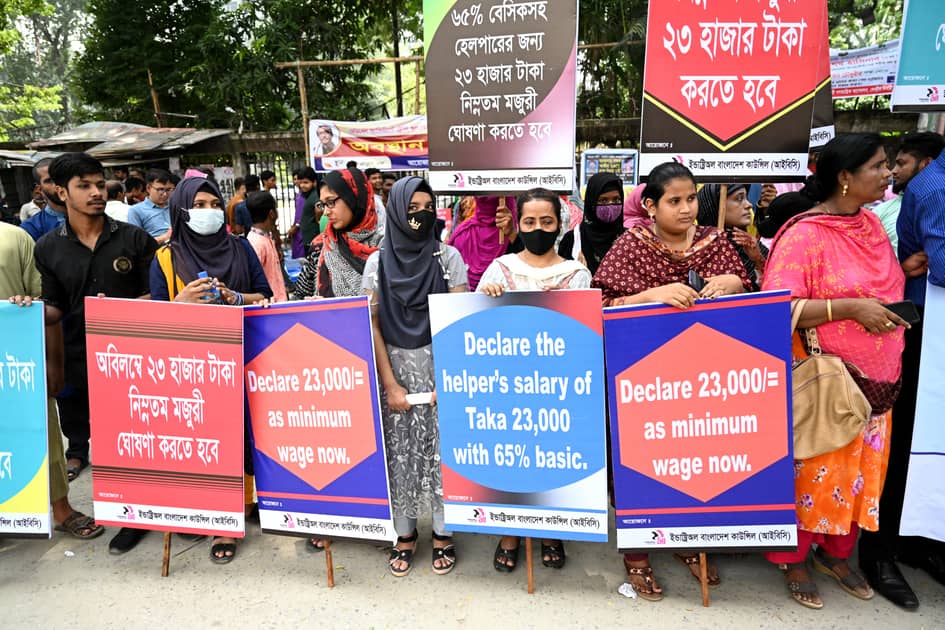
Activists from the IndustriALL Bangladesh Council hold a protest rally to demand an increase in the minimum wage for textile workers in Dhaka, Bangladesh, on 1 October 2023. Credits: STR / Nur Photo / NurPhoto via AFP
Swedish fast fashion giant H&M is understood to have told its suppliers in Bangladesh that it would be upping its unit prices following the recently announced minimum wage increase for garment workers in the region.
The company reportedly said that it would “absorb the increase in wages” in its product prices, becoming one of the first retailers operating in the country to do so, as stated by Apparel Insider, which initially published this news.
Protests erupted in Bangladesh towards the end of last month as garment workers took to the streets demanding a near-tripling of their wages.
The vast majority of employees, many working for the suppliers of global fashion retailers, were on monthly wages starting at 8,300 taka (60 pounds), leading to unrest as many mobilised on the streets surrounding the capital Dhaka.
Despite the Bangladeshi government appearing to have partially listened to the demands, increasing the wage by 51 percent to 12,500 taka (90 pounds), a number of workers’ rights organisations are calling for a reconsideration of the decision.
A similar request has also been put forward by the US government, which has urged Bangladesh to revisit the minimum wage and address the economic pressures faced by workers.
It comes following the death of a woman during the garment worker protests, Anjuara Khatun, who was killed by police, which has also seen the US and other initiatives further demand for the protections of workers’ rights.
H&M’s move to up its unit prices is a step in the right direction, despite the increase only supporting the current minimum wage. It is yet to become clear if other retailers follow suit.
Read more:
* Minimum wage for textile workers in Bangladesh up, but far below union demands
* US government urges Bangladesh to reconsider minimum wage increase
* What the new minimum wage means for garment workers in Bangladesh
http://dlvr.it/SzMVN1
From margins to sell-through: Important figures used in the fashion industry
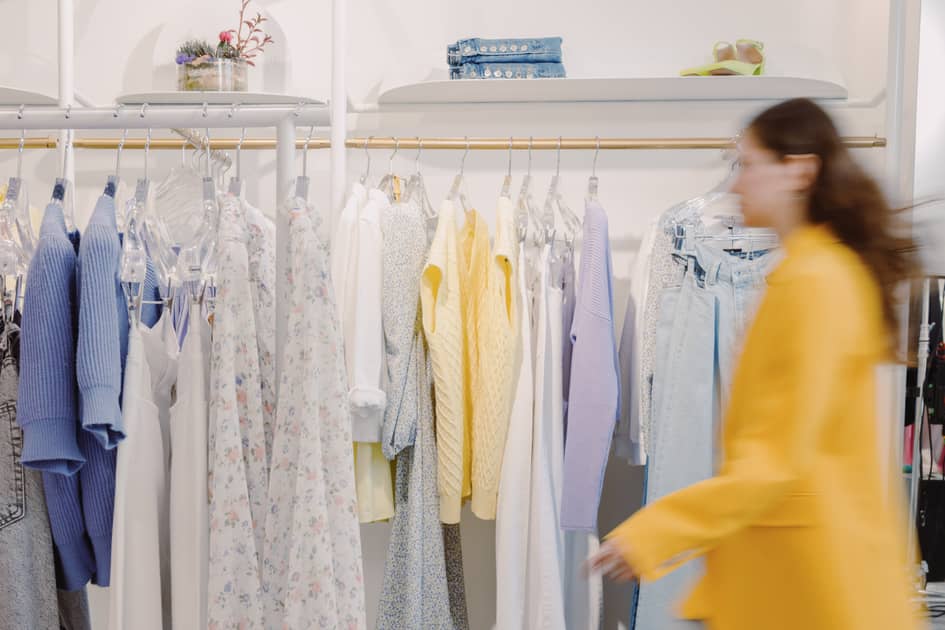
A clothing store for women's fashion. Image for illustration. Credit: Ron Lach image via Pexels.
On this page you will find key figures used in the fashion industry to monitor and optimise performance, such as sell-through, margin, and turnover, among others.
Retailers use numerical analyses to substantiate business decisions, such as making a purchasing plan and budget for the next fashion season.
“We sometimes compare choices for budgets and brands with buying shares of a company,” says independent Dutch retailer John Mulder of Mulder Mode to FashionUnited. “If a share performs well, you buy more; if a share is bad, you quit or trade less.”
Mulder adds: “As far as buying is concerned, this seems to be happening earlier and earlier, appointments in June/July for the following summer are no exception. If you had only sold 50 percent of the collection, you would miss quite a bit of data to be able to purchase properly. We therefore prefer to buy from the end of July/beginning of August in order to be able to substantiate the buying with as realistic a picture as possible.”
You can choose to read the article from beginning to end.
Or click on a term from the glossary (glossary A-Z) to go directly to it.
Glossary (A-Z)
* Gross profit margin
* Margin (purchasing margin/starting margin/net margin)
* Return / profitability
* Sales share
* Sell-through / sell-through rate
* Turnover rate / Turnover rate
We also deal with:
* Purchasing costs
* Stock value
* Writedown stock/inventory
Sell-through / Sell-through percentage / Resell percentage
What does resale mean?
Resale represents how much of the purchased collection (read: the stock/inventory) the retailer has sold to its customer, the consumer.
How do you calculate the sell-through percentage? You divide the purchase value of items sold by the purchase value of the delivered items and multiply this by 100.
For example, if the purchase value of the items sold is 10,000 euros and the purchase value of the delivered items is 20,000 euros, then the sell-through percentage is (10,000 / 20,000) x 100 percent = 50 percent. This percentage tells us that half of the purchased stock has been sold in that period.
Over the course of a season, the sell-through rate or percentage is an important indicator of how clothing brands are performing, so that adjustments can be made. For example, retailers can decide to purchase additional items that are performing above average and exchange items that are not performing as well (so-called slow movers) from the brands for other products.
Aim for a 70 percent sell-through rate
Retailers also keep track of the resale of their entire collection. Retailers aim for a 70 percent sell-through rate before the sale begins. So they try to resell 70 percent of their entire collection to the consumer, for the original price (i.e. without giving a discount).
"Our experience is that it is increasingly challenging to achieve the 70 percent for clearance sales," said store owner John Mulder of Mulder Mode. "The seasons sometimes start later (referring to the weather, ed.) and sales start earlier and earlier. With some clothing brands you are also tied to a certain budget, which can make it more difficult to realise 70 percent.” Nowadays, the sell-through percentage in fashion at the start of the sale is increasingly around 60 percent. "And this can therefore have a significant impact on the results.” (Because, if there is more clothing sold at a discount, this means less income for the retailer.)
The goal is to have a sell-through percentage of 90-95 percent by the end of the season - after the sale. (Because, keeping stock costs money, as goods quickly become less valuable. More on the written down value method, a depreciation technique later in the article, ed.)
Turnover rate
What is turnover velocity? What is turnover rate?
Sales rate and turnover rate are often used interchangeably. Both terms refer to the number of times the average inventory is sold in a given period, such as a season or a year. Turnover speed can be calculated at different levels, for example for category/product groups, brands or individual products.
How do you calculate the turnover rate? You divide the purchasing value of the turnover (this is the total cost price of all products sold in a certain period) by the average purchasing value of the stock (this is the average cost price of all products that were in stock for a certain period).
For example, if the purchasing value of sales is 100,000 euros and the average purchasing value of inventory is 25,000 euros, then the turnover ratio is (100,000 / 25,000) = 4. This means that the company's inventory has been sold four times during that period.
In general, retailers strive for a high(er) turnover rate. A low turnover rate can indicate too much inventory or products that don’t meet customer demand and can lead to a lower profit margin.
For retailers, a higher turnover rate means that money is regularly coming in from the sale of products. This improves cash flow and can lead to a higher profit margin.
Gross profit margin / profit margin / margin
What is gross profit margin?
Gross profit margin, or gross margin, is the percentage of profit a company makes on the sale of products.
How do you calculate the gross margin?
You divide by the gross profit by the turnover excluding VAT and multiply this by 100.
For example, if a company has made 10,000 euros in turnover excluding VAT and the gross profit is 3,000 euros, then the gross margin is 30 percent. This means that the company has made a 30 percent profit on product sales.
Retailers generally strive for a high gross margin. A higher gross margin means that a retailer keeps a larger portion of the sales price as profit.
There are various ways in which fashion retailers can increase their gross margin, such as reducing purchasing costs (see purchasing costs).
Profitability / Return
What is profitability?
Profitability is a way of measuring how well a fashion company manages to make a profit with the resources it has (invested). Often, profitability is understood for all the clothing brands a retailer sells.
How do you calculate profitability? The key figure takes into account two important factors: the turnover rate and the margin.
You divide the gross profit of the turnover by the purchasing value of the turnover and multiply this by the turnover rate.
Suppose the outcome is a profitability of 20 percent. This means that the retailer has made a profit of 20 pence for every pound invested.
The higher the profitability, the more efficiently a company uses its resources to make a profit. Here too, the general aim is for a high return/profitability.
Sales share
What is turnover share?
Sales share is the percentage of a fashion company's total revenue that is generated by a specific brand, product, category or segment. It therefore provides insight into performance.
How do you calculate turnover share? For example, you take the turnover of a fashion brand in a certain period (say a month, quarter or year), divide this by the total turnover and multiply this by 100.
Suppose the total turnover of a retailer's clothing store last month was 50,000 euros and the turnover of brand 'X' in the same period was 10,000 euros. Then he divides 10,000 by 50,000 x 100 percent = 20 percent. This means that brand X was responsible for 20 percent of the clothing store's total turnover in the past month.
A high revenue share may mean that a product or brand is popular and selling well, while a low revenue share may indicate less popularity and less demand in the market. But beware, “it does not mean that a small turnover share automatically means that a brand is performing poorly”, Dutch retail organisation INretail emphasises in its report 'How do you prepare for the Fashion purchasing season?'. Some brands can make a smaller contribution to turnover, but are still important to the total offering of the store.
Margin (startmargin and netmargin)
What is a starting margin?
When people talk about margin, it is often about the buying margin or starting margin as it is called.
How do you calculate margin? Purchase price (excl. VAT) multiplied by the margin equals the sales price incl. VAT.
In fashion, the margin - also called the calculation number or factor - is often around 2.7. For example, a supplier, say a fashion brand X sells a pair of trousers to the retailer for 20 euros (i.e. it costs the retailer 20 euros to buy the trousers). Then you take the margin 2.7 and multiply it and you arrive at the recommended retail price. So these trousers are in the store for 54 euros.
The text continues below the visual
Visualisation of margin. Credits: FashionUnited
This factor is important to retailers because it gives them information about how much money can be made on the sale of the garment to the consumer. The higher the margin, the more money can be made. Provided the garments are actually sold.
Which brings us to net margin.
The net margin is more important than the starting margin, because it can be high but if the retailer doesn’t sell the item, it brings in nothing. Net margin is the margin after seasonal adjustments, i.e. after replenishment or withdrawing [of clothing from fashion brands, ed.] in response to the results. In other words, the actual margin, at the end of the season.
The text continues below the photo
A clothing store for women's fashion. Image for illustration. Credit: image Ron Lach via Pexels
We will explain a few more terms/figures:
Buying costs
Buying costs are the costs that a fashion retailer incurs when buying clothing and accessories. These are, of course, the costs of the products themselves, but also consider, for instance, possible import duties, transport and/or packaging costs.
Purchasing costs are an important part of a retailer's total costs and therefore have a (major) impact on the profitability of the clothing store. (Because, sales - costs = profit/loss)
Inventory value
Inventory value refers to the value of the total inventory held by a fashion retailer. The inventory value is an important figure because it is directly related to the financial health of the company.
An inventory value that is too high can mean there is too much stock that is not being sold quickly enough, which could jeopardise the company's cash flow. Too low an inventory value could mean that the company does not have enough stock to meet customer demand, missing out on potential sales.
Write-down stock
What is inventory write-down?
The accounting term write-down refers to reducing the value of the unsold clothing items in stock. After all, clothing is trend-sensitive, goods become outdated quickly and go 'out of fashion'. The longer the product remains in stock, the less it is worth. Ultimately these products become unsellable.
For textiles and clothing in the Netherlands, mandatory depreciation percentages have been set by the tax authorities. “The depreciation percentages for women's and men's fashion and shoes differ,” says John Mulder. (In the UK, clothing, accessories and footwear are subject to the standard 20 percent VAT, however, zero rate VAT is applied to babywear, and children’s clothes and footwear, ed.)
Retailers try to minimise inventory write-downs / stock depreciation through effective stock management.
Sources:
- Interview with John Mulder, co-owner of fashion store Mulder Mode in Waddinxveen, June 1, 2023
- Website trade organisation INretail and the report 'How do you prepare for the Fashion purchasing season?' which was released for members on December 3, 2020
- Content from the FashionUnited archive and specifically the articles 'Being an independent retailer: this is what it takes to run a fashion store', January 25, 2023 and 'What does a fashion agent do?', November 24, 2022
- TMO Fashion Business School as attended by the author of the article
- Belastingdienst.nl 'Valuation of stock in your company', consulted in June 2023
- Gov.uk VAT rates on different goods and services, consulted in October 2023
- Parts of this article text were generated with an artificial intelligence (AI) tool and then edited.
A clothing store for women's fashion. Image for illustration. Credit: image Ron Lach via Pexels
Also read:
* From fibre to garment: the technical 'make-up' of your clothing
* The contrast between haute couture and ready-to-wear
* Tips for building a more sustainable wardrobe
* Jeans and denim: everything you need to know about jeans
* The role of colour in fashion
* This is how a fashion brand’s collection is created
* Everything about the traditional supply chain and the core players of fashion industry
* How fashion trends find their way into our wardrobe
* What are fashion trade shows and when do they take place?
* Everything about the traditional supply chain and the core players of fashion industry
http://dlvr.it/SzM9dq
Black Friday 2023 marks record online spending in the UK
Black Friday Credits: Pexels
In the UK, Black Friday emerged as the most significant online shopping day of 2023 so far, with consumers spending 1.04 billion pounds online, marking a 4.1 percent year-over-year increase. Adobe Analytics, employed by many major retailers to enhance online shopping experiences, was used by the Adobe Digital Insights team to analyse millions of visits to retail sites, tracking prices across 100 million SKUs in 18 product categories.
Vivek Pandya, lead analyst at Adobe Digital Insights, highlighted the ongoing importance of Black Friday for both retailers, boosting sales during the crucial holiday trading period, and consumers seeking opportunities to maximize savings.
According to UK Black Friday online spending data from Adobe Analytics:
*
Holiday season spending from November 1 to November 24 reached 9.6 billion pounds, showing a 4.7 percent increase from 2022.
*
UK shoppers used Buy Now Pay Later services to spend 101 million pounds on Black Friday, comprising 9.7 percent of the total online spend for the day, and marking a 3.4 percent increase from Black Friday 2022. BNPL holiday season spending-to-date (Nov 1 – 24) is 1.3 billion pounds.
*
Popular products included Micro scooters, puzzles, jelly cats, slippers, gift boxes, jewellery, and personal care items like face creams and lotions.
Average online prices saw a 12 percent discount compared to pre-holiday season levels, with the most substantial discounts apparel offered 14 percent cheaper.
*
Click and collect usage rose to 8 percent of orders on Black Friday (for retailers offering the service), up from 6.4 percent the previous year, indicating a 24.7 percent growth in service utilisation.
*
In London, total online Black Friday spending reached 251 million pounds, showing a 4.6 percent year-over-year increase.
As Black Friday emerged as the pinnacle of online shopping in the UK for 2023, the robust 1.04 billion pounds spending reflects the consumer appetite for seizing compelling discounts.
http://dlvr.it/SzM9S9
Saturday, November 25, 2023
Hackett London opens new store dedicated to premium line
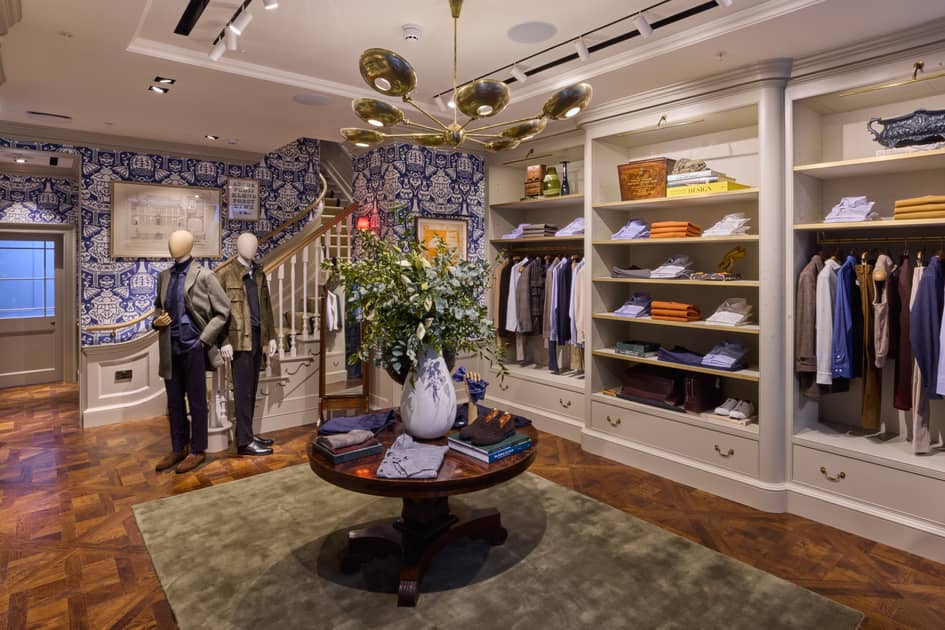
Hackett London New Bond Street store Credits: Hackett London
Interview
Heritage British brand Hackett London, part of Spain-based fashion group AWWG, has opened a new store on New Bond Street, the world’s first to be fully dedicated to its premium Savile Row ready-to-wear collection.
The new location at 69 New Bond Street is part of the menswear brand’s strategy to drive brand recognition and allow its premium ready-to-wear line “to breathe,” said Gianni Colarossi, vice president of Hackett Product at AWWG in an interview with FashionUnited.
Colarossi, added: “No.14 Savile Row Collection is effortless elegance, never contrived or forced, just beautifully tailored clothing, and the Bond Street store allows us to fully spotlight our growing collection, which each season keeps developing into a full lifestyle offering.”
The new 2,350 square foot store has been designed to not only test the market for its aspirational premium offering but to complement its other West End locations, including its Savile Row townhouse, where its atelier is located for custom made-to-measure suits, and its Regent Street and Jermyn Street stores.
Hackett London's Gianni Colarossi and Dan Slater in the New Bond Street store Credits: Hackett London
“This store shows how Hackett is evolving,” explained Dan Slater, vice president of Hackett Retail at AWWG on a tour of the store. “No two Hackett stores are the same, and we wanted a location to sit among our peers, and there is no better location or stronger statement than opening on Bond Street.”
Described as a “hub for men with taste who value the blend of traditional craftsmanship with a contemporary feel,” the two-storey boutique blends classic and contemporary design detailing, elevating the Georgian architecture that is part of Hackett’s heritage with mid-century modern soft furniture and contemporary British design wallpapers and artwork by Hormazd Narielwalla.
There are also vintage and unique décor pieces inspired by founder Jeremy Hackett’s “passion for exploration, discovery and antiques”.
Hackett London New Bond Street store Credits: Hackett London
The design also features familiar elements from Hackett’s 14 Savile Row townhouse, including the striking emerald-green panelled walls of its member's room, which now adorns the first-floor space with a large window overlooking Bond Street.
Slater said: “We wanted to translate the Savile Row townhouse on a smaller scale, highlighting our heritage and charm in a welcoming way to really showcase the Savile Row collection, and make it an experience for new and returning customers.”
Hackett London driving brand aspiration with new Bond Street store dedicated to No.14 Savile Row Collection
The store also offers personal tailoring, made-to-measure and bespoke services, as well as in-house barber and grooming services on the first floor.
Colarossi added: “Bond Street has been designed to slow the retail experience down. We want to offer the consumer comfort and show him he’s in good hands. He can peruse and try on the collection and have a coffee or a shave."
The Bond Street location will also be used to fulfil e-commerce orders for the No.14 Savile Row collection "for better customer service," said Slater.
Hackett London New Bond Street store Credits: Hackett London
The Hackett Savile Row ready-to-wear collection is the premium line within the Hackett clothing range, sitting alongside Hackett London, Hackett Sport, and its bespoke services on Savile Row. The collection, designed by Colarossi, embodies the brand's tailoring roots while developing into a full lifestyle offering, featuring shirts, suits and chinos, as well as outerwear, blazers, polos and knitwear.
“The goal is to offer a collection that’s modern and relevant,” adds Colarossi. “To create a lifestyle line where we can dress from a black-tie event to the weekend, interpreting what men want to wear now.”
This is translated into an autumn/winter 2023 collection filled with seasonal colours of ecrus, browns and greens that are paired back with rich navy and warm greys. These colours are seen across coats, suits and jackets, in wools, silks and cashmere, with layering items in cotton, silk blends, and merino. The collection also includes a capsule of hybrid outerwear and a range of partywear for the upcoming holiday season.
“Hackett London will always be the majority of our sales, but with the Savile Row line we are developing our brand positioning, while offering that element of aspiration and feeding the appetite we see from consumers looking for traditional yet contemporary options,” added Colarossi.
Hackett London New Bond Street store Credits: Hackett London
http://dlvr.it/SzHm3Y
Gucci amplifies battle against US counterfeiters
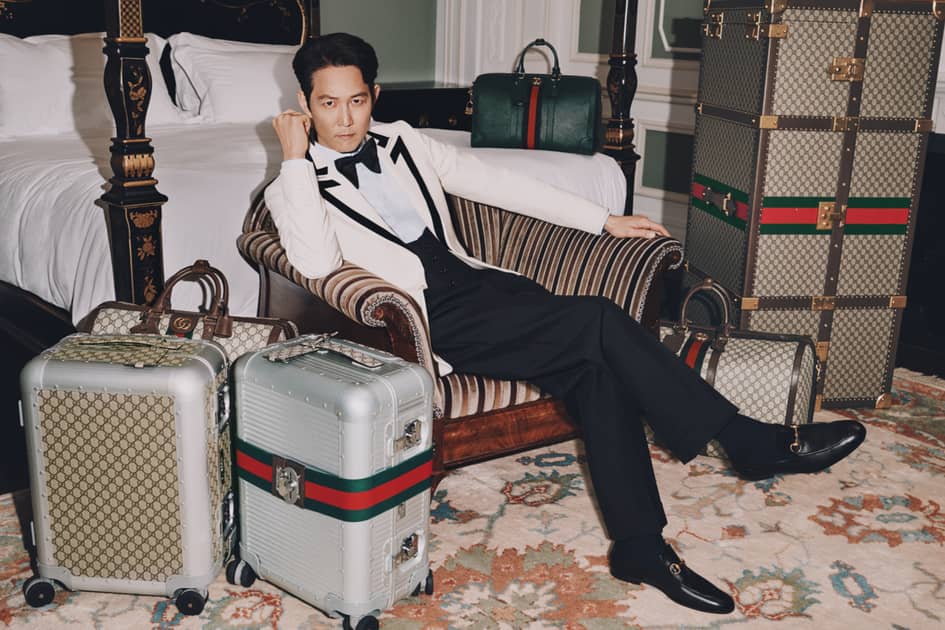
Gucci luggage campaign with Jungjae Lee Credits: Gucci, photo by Hanna Moon
Gucci is escalating its efforts to combat counterfeiting, initiating legal action against three U.S. retailers: Sam's Club, Century 21, and Lord & Taylor.
The lawsuits, filed by Gucci's American division in federal court in Manhattan, allege these retailers' involvement in the illicit sale of counterfeit Gucci products. The luxury brand underscores its dedication to safeguarding customers from counterfeit sales and emphasizes a comprehensive investigation preceding the legal proceedings.
In the lawsuit against Lord & Taylor, Gucci highlights its significant advertising investment in promoting the brand in the U.S., underscoring the market's importance. Gucci is pursuing injunctions and financial compensation, citing trademark infringement and unfair competition by the retailers. The legal action also calls for the surrender and potential destruction of counterfeit items.
Gucci's investigations involved purchases from the retailers' websites, revealing the inauthentic nature of the products. While Lord & Taylor remains silent on the matter, Sam's Club acknowledges removing the identified products and plans to address the complaint in court. Century 21 has chosen not to provide a statement.
Gucci's ongoing battle against counterfeiting reflects the broader challenge faced by luxury brands dealing with unauthorized reproductions through various distribution channels. Gucci, a frequent target of counterfeiting, has previously secured legal protection for its iconic 'green-red-green ribbon' and engaged in collaborations, such as the one with Facebook in 2021, to protect its intellectual property.
http://dlvr.it/SzHlsQ
Friday, November 24, 2023
Former Google exec joins Coty as chief digital officer
Coty steps into the metaverse with Coty Campus. Credits: Coty.
Pierric Duithot, a former executive of Google and director at Meta, has been named as the newest chief digital officer for beauty and cosmetics giant Coty.
The conglomerate, which owns the likes of Kylie Cosmetics and Rimmel, announced the appointment via its official LinkedIn page, where it said Duthoit would be taking up the role from December 1.
It continued: “Pierric’s previous experience of growing digital and FMCG [fast-moving consumer goods] businesses at an international scale strongly complements Coty’s strategic digital priorities.”
Duthoit joins Coty from social media firm Meta, where he most recently served as business director France over the course of one year.
Prior to Meta, he further held executive positions at Google, including industry director of a number of divisions for the Middle East, North Africa.
Duthoit also boasts experience within the fashion industry, namely at Patagonia, where he served as consultant for Russia for two years, and at Russian fashion platform Woman Journal, where he was CEO for nearly five years.
His appointment at Coty comes at a time when the beauty group, which has only recently secured a second stock exchange listing in Paris, has been upping its efforts in the realm of the digital world.
Among its initiatives, the company has worked with tech giants like Perfect Corp to introduce virtual try-on features for its brands, and has launched its own virtual world which employees are encouraged to utilise in order to gain a wider understanding of the metaverse as a whole.
Read more:
* How beauty retail is leading the way in tech innovation
http://dlvr.it/SzFrw6
Roots appoints new chief marketing officer
Credits: Roots Facebook
Canadian lifestyle brand Roots Corporation has announced the appointment of Leslie Golts as its new chief marketing officer.
She ultimately brings to the table over 15 years of experience, Roots said in a release, particularly surrounding marketing and communications leadership.
Golts joins the company from Unilever Canada’s Beauty and Wellness Business Unit, where she served as general manager and head of marketing.
At the cosmetics giant, Golts was credited with helping to drive profitable growth and “ensuring brand success across diverse categories”.
Prior to this, she also held a series of managerial positions at L’Oréal Canada, and had played a “key role” in the development of global campaigns for the Dove brand.
Speaking on the appointment, Meghan Roach, president and chief executive officer at Roots, said: "Leslie brings a wealth of experience and proven success in building iconic brands to Roots.
"She is a talented leader that will play a critical role in advancing the company's marketing initiatives and reinforcing its position in the market. With her deep life-long love for Roots, she is an excellent cultural fit, and we are pleased to welcome her to the team."
Golts further commented on the new role, adding: "I am thrilled to be part of the Roots Corporation family and excited about the opportunities to elevate the brand to new heights.
"Roots has a rich history, and I look forward to collaborating with the team to create compelling marketing strategies that resonate with our diverse audience."
http://dlvr.it/SzFrWl
Stella McCartney appoints Amandine Ohayon as CEO
Kendall Jenner in Stella McCartney Herbst 2023 Credits: Harley Weir
A new chief executive officer has been named at British luxury brand Stella McCartney, with Amandine Ohayon understood to be taking up the helm position from December 1.
From her base in London, Ohayon will succeed Gabriele Maggio, who had initially joined the company in 2019 as both president and CEO, and is expected to leave to pursue other opportunities, according to WWD, which first reported the news.
Ohayon most recently served as CEO of Spanish bridal brand Pronovias for over five years, prior to which she held a number of leadership roles at beauty giant L’Oréal.
Here she worked with the likes of YSL, Armani Beauty, Giorgio Armani Beauty and Lancome, primarily as general manager, but also as marketing director or development product manager across the range of brands.
Former Pronovias CEO joins McCartney
On her LinkedIn, Ohayon says she holds over 25 years of luxury expertise and has a “proven international track record of growth and business transformations in beauty and fashion”.
Stella McCartney confirmed Ohayon’s appointment in a statement to WWD, stating that “her people-first leadership and brand-building skills combined with her [ability to execute] have been pivotal in the success of brands”.
The company added that it had tasked its new executive with elevating the house and “accelerating its development based on its longstanding commitment to sustainable fashion”.
In addition to this, designer Stella McCartney noted in her own comment that Ohayon’s “leadership and wealth of experience across businesses and geographies will be strong assets to build a brilliant future for the company. Her passion for great fashion and ethical values makes her a great partner in our quest to champion a sustainable way to business success.”
http://dlvr.it/SzFr90
Subscribe to:
Posts (Atom)